Ultimate Setup Guide for Racing Simulation v1.1
GHub Platform · Гайд · 0 ответов · 15 просмотров
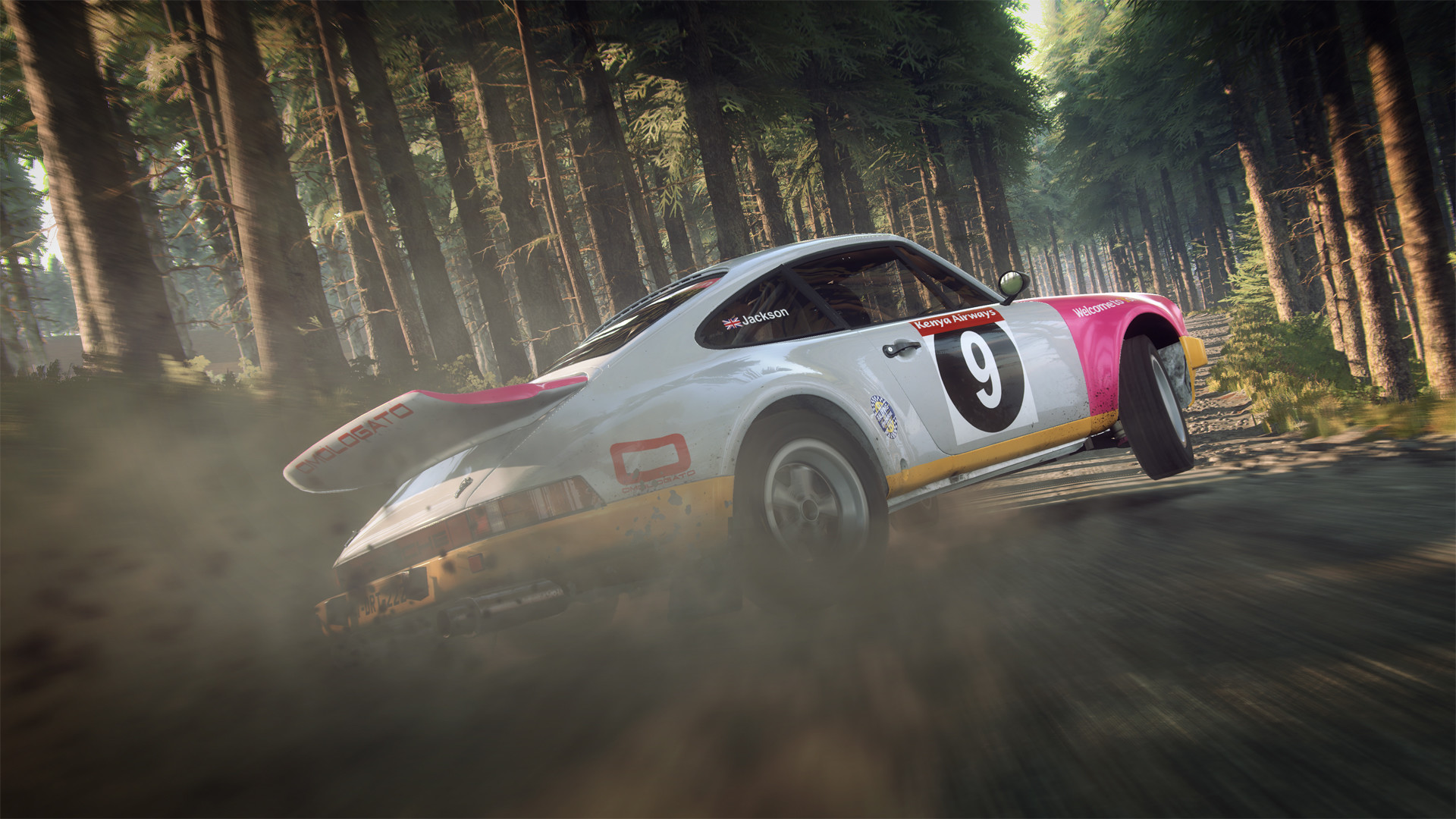
Through the guide oversteer and understeer terms will often be emphasized. So, here is an image with brief description to get the basic idea: Oversteer : Rear wheels are slipping more than front wheels or front wheel grip is higher. Understeer : Front wheels are slipping more than rear wheels or rear wheel grip is higher. To overcome understeer , you may steer through the direction where car tends to slip (out of the way) and apply a little brake (maybe handbrake). Everyone knows about brakes but, i will emphasize its not less important function than that; weight shifting ! Always remember when braking: When a vehicle enters braking in a straight line, the weight transfers to the front. The back end will not have the same grip as the front. When a car is sliding sideways, you may want to downshift instead of using brakes to pull the car's nose forward again (more on that in differentials). If you are using an RWD car and you want the back end to be more "controlled" then a 40/60 rear/front bias might be more appropriate. You can control some of the gross oversteer of the RWD cars by shifting the braking power to the front, which I highly recommend you to do. Logic behind this: Driver wheels (so is power) are at the back in an RWD car and you lose that power with brake. So, let rear wheels clinged onto the road and push you forward, by just rounding, instead of slipping.(Slipping wheels does not hold onto the road only rounding ones) Biasing brakes more on rear (I don't mean below 50%) for FWD or AWD vehicles will support aligning the rear of the car to the road by drifting with locked rear wheels. (This is a taste of driving) Warning: Too much on bias or brake power will make the car unstable and unusable. If you find you are braking too late and constantly running into the wall you might consider bumping up the braking strength by one notch. If you like to start on the brakes really early, then dropping the power down by one might be for you.Otherwise the standard braking power is probably the best for most of the game. Dirt Rally 2.0 Hint: (Braking Force) High brake strength can make braking more responsive but it can also cause your wheels to lock. Low brake strength can make braking feel vague but should reduce the chances of the wheels locking up. (Brake Bias) Front-biased brakes can reduce oversteer but cause understeer under heavy braking. Rear-biased brakes can reduce understeer, but cause oversteer under heavy braking. Too much bias on either axle can cause the wheels to lock. WRC 8 Hint: (Brake Bias) Determines car behavior on corners. With more power at the rear [-] the car is prone to oversteering, facilitating drifts. With more power at the front [+] you have more stopping power, but the car is prone to understeering. Physics: Mentioned earlier; as car decelerates, load transfers to the front tires, which improves front tire grip while decreasing the grip at the rear of the car. All load transfers like this on a car are similar to the effect aerodynamic elements on a plane such as wings. They increase/decrease load on the tires without changing the weight. This can have a big effect on car balance, so the primary goal is to adjust the proportion of the braking forces between front and rear (brake bias) in order to maximize overall braking efficiency. You will find brake bias crucial at the corner entry points. So, you may keep an eye on the car when entering a corner if you need to adjust this setting. Front Bias: Front biased brakes tend to cause understeer while used. This is often because the wheels do not have enough traction to both redirect momentum while simultaneously slowing. Front biased brakes also shift weight more quickly to the front, which allows for extra traction (and, therefore, braking ability) up front. If the front wheels lock, all effects are exaggerated. Rear Bias: Rear biased brakes tend to cause oversteer while braking. Most vehicles will oversteer and slide if brakes are applied while turning. In FWD vehicles, this is a desirable, predictable, and consistent loose surface and hairpin turn technique. Both AWD and FWD vehicles can make great use of a slight rear brake bias. It allows for a consistent rotation without any throttle input. This can be especially useful when it is paired with a strong differential and a straight-line stability-focused suspension setup because; it allows the driver to spin the car while braking, and then accelerate into a predictable, self-straightening slide. Rear biased brakes and RWD vehicles do not generally combine for predictable handling. We'll go over some ways to set the theoretical optimum first and then talk about some of the compromises you may decide to make. The easiest way to set the optimum is visually. You will adjust the brake bias until the front and rear start to lock up under braking at the same time. You might want to have a slight forward bias to lock up the fronts just a little bit sooner for stability though. If you have a sensitive and skilled driver, they will be able to set the brake bias simply based on how the car responds under braking and this might be the ideal way to begin setting your bias even for a novice. Although the theoretical optimum might be ideal for straight-line braking this might not provide the stability needed for carrying the brakes into the turn for trail braking. When a driver first starts experimenting with trail braking, it would be a good idea to set a more forward bias for extra stability and then slowly work their way rearward as their skills improve. Some drivers will set more rearward bias than is optimal and use advanced techniques like mixing throttle with braking to have more control over the car at corner entry. There is not a lot of time to be gained by the theoretical optimum bias and it can change from corner to corner if there are elevation changes in the brake zone, aero effects, tire grip changes, etc.. Usually focusing on what makes a driver most comfortable under threshold braking, and trail braking will be the overriding factor. Strengthening the brakes will cause your tires to lock up quickly, which turns your car into a runaway piece of steel. You don’t want to lock your wheels too quickly. Remember ABS technology is there for to make car stable on a brake by just grabbing and releasing wheels constantly. One most important effect of braking strength is it determines how fast you car weight shifts. Thus it should be supported with your suspension (which reacts that weight location changes). Very strength brakes makes your car unstable especially on high speeds due to this quick weight transfer. The front differential comes into play with FWD and AWD vehicles (RWD cars do not have a front differential.) , ! Differentials usually take more time to perfect. Adjusting the differential requires the driver/tuner to understand exactly what the issue is while driving. You won't revisit your completed setup and say I will open this diff a little without experiencing an issue while your previous drive. Differential settings are generally adjusted to fine tune performance in particular situations, or to correct problems that only arise in particular situations. These adjustments can be very different between drivetrains, although the general theory remains the same. There is no perfect setting. Your front differential tune should complement your rear differential strategy (more on that in the rear diff section). With the very basic explanation; the stronger or locked the diff, the more the differential is forcing both wheels to rotate at the same speed. Thus preventing inbalanced torque transmit where one of the wheels are on slippery condition or lost grip. Warning: You have to steer the car with the front so don't ever completely lock the front differential. If you lock the front completely the car will grossly understeer and be completely unmanageable. Open vs. Locked Differentials: Open differentials all
ИсточникGHub Platform · автор22.08.2026, 23:43:49
Through the guide oversteer and understeer terms will often be emphasized. So, here is an image with brief description to get the basic idea: Oversteer : Rear wheels are slipping more than front wheels or front wheel grip is higher. Understeer : Front wheels are slipping more tha…
Войдите, чтобы писать в группе