RedOut: Lore (English)
GHub Platform · Гайд · 0 ответов · 17 просмотров
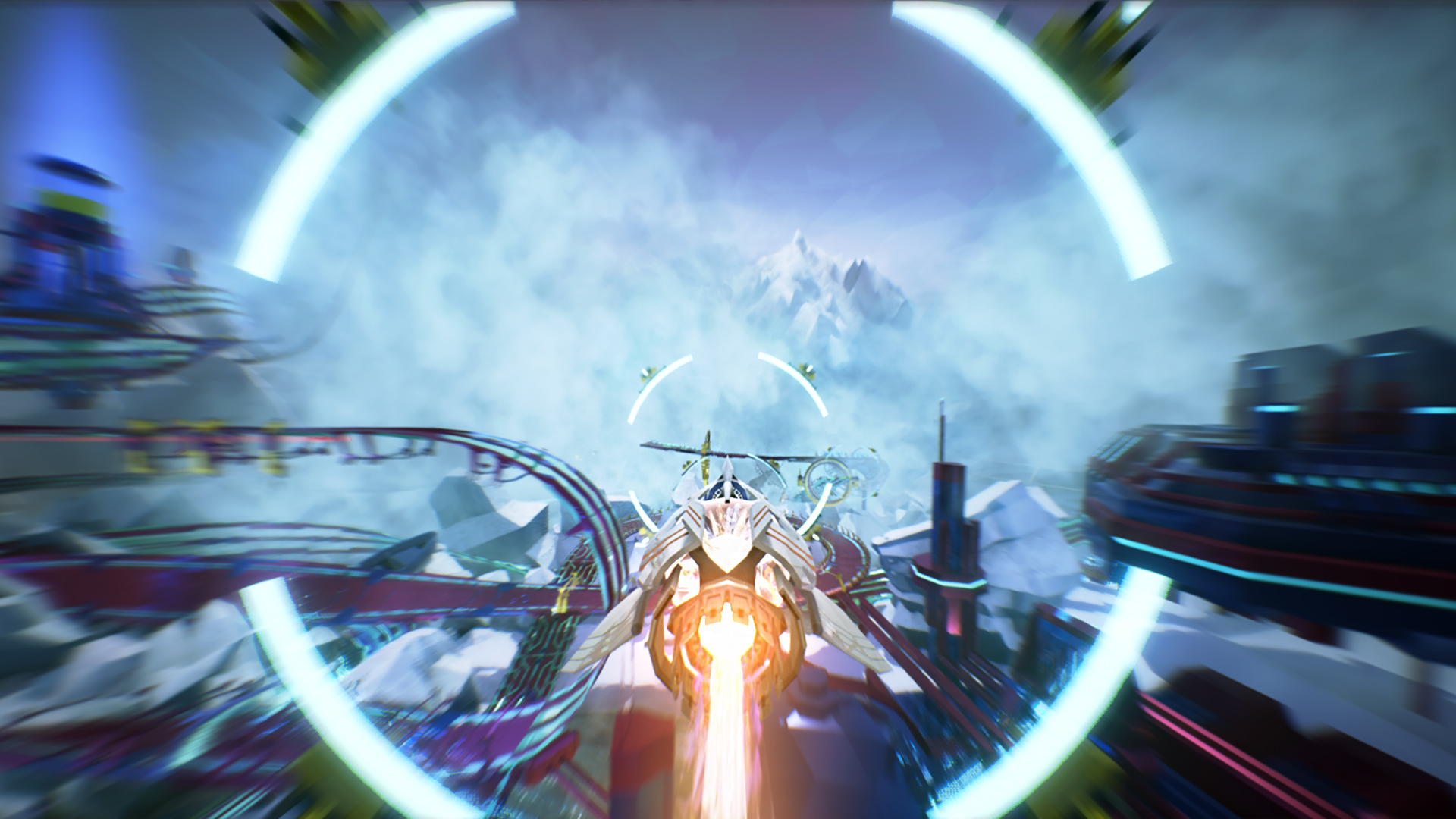
It’s AD 2560. Earth has been stripped of its natural resources. Global warming caused the melting of the northern polar ice cap, tropical storms ravage all areas that didn’t suffer from desertification. Pockets of humans are crawling their lives away in a few slums, descendants of those who were left behind or refused to leave, while others created huge conurbations where some of the most populous cities on Earth used to be. Most of humanity, though, has moved on the Moon, Mars, Titan, and other Jupiter’s moons. Earth is often used as a location for entertainment events such as hi-speed races, futuristic amusement parks and zoo parks, which allows local communities to work and profit in a harsh environment and is usually the only source of income. The most followed sport is the SRRL, acronym for Solar RedOut Racing League. This is the fastest racing league ever created, in which daring pilots drive levitating ships on magnetic tracks. Never before humanity had seen vehicles this powerful and motorsport racing hitting these speeds. The RedOut league spurred an incredible technological advancement and quickly became the most popular form of entertainment of the entire Solar system. 2218: Humanity attempts the leap to a Type 2 Civilization by starting massive terraforming operations on the surface of the Moon. The effort is led by NASA. 2281: After over 40 years of launches and construction of lunar structures, a colony of scientists is sent living and working permanently on the Moon. Results of the terraforming are encouraging, but there’s no breakthrough yet. 2312: Despite all efforts, terraforming is not effective. Some space agencies begin diverting their attention on reaching Mars more efficiently, especially the ESA. 2362: The first expedition of civilian settlers depart from the Earth and joins the community of scientists on the Moon. They quickly adapt to the lifestyle and the artificial gravity, although they are forced to live inside artificial structures. 2368: The situation on Earth is dire. All nations adhere to a strict colonization program and start sending regular shipments of settlers to the Moon, while all research efforts are diverted on terraforming drones, fast space travel and high-atmosphere transport vehicles. 2379: The first experimental terraforming drone is sent to Mars. After only 72 days of travel, the ESA-MARS-1 descends on the surface and starts operations. It’s a resounding success. 2386: More and more terraforming drones are sent to Mars. By the end of the year, the terraformed area consist of 36 square km. 2388: The first community of 410 explorers and workers is sent to Mars. Their travel time is 56 days. 2395: Mars is entirely terraformed. Humanity begins the biggest exodus in history. 2418: A terraforming drone is sent to Titan. Space travel times improved exponentially. The drone reaches Titan in 218 days. 2419: Terraforming on Titan is also a huge success. Explorers and workers are sent the same year. A terraforming drone is sent to Europa, quickly followed by a team of scientists. 2421: Terraforming Europa fails, potential settlers fall back to Titan. 2423: Travelling between the Moon and Mars is common business. The construction of the very first RedOut racetrack begins in the space between the Moon and the Earth, using disbanded test facilities for electromagnetic acceleration. Si quieres leer esta guía en español haz clic aquí . Complex: Cairo Desert, pyramids, rocks, a river, an oasis, a once grand business district alongside slums and crumbling ruins: the Cairo racetrack is this and much more. Built in 2486, is the most ancient racing complex still active to date and it’s uniquely fascinating. It was built in parallel with another racing complex at the North Pole, later abandoned. The five tracks went through radical modifications during the years, but many sections still retain their original design, and maybe that's why fans and drivers alike are always fascinated by this location. Complex: Alaska The Alaskan SRRL Racing Complex was built in 2554, so it's been active for 6 years only. Although global warming has melted the ice caps, the microclimate of this region shows an average temperature of -12°F (-24°C), despite the presence of the sea. After the North Pole Racing Complex was abandoned in 2512 due to inadequate security standards and heavy maintenance costs, the SRRL decided to build another complex altogether in a region even more extreme, to offer more exciting races and to test a new form of magnetic suspension tech. Complex: Abruzzo The remainings of the Italian coastline: here lies the second oldest racing complex of the league, built in 2492. The early days of AG racing unfolded on Mars, in Cairo, and here. For some mysterious anomaly, vegetation has started growing uncontrollably since 2499. Some say it's a side effect of chemicals used to cool down the first models of magnetic stabilizers, but the SRRL always refused to comment on the matter. Trees and branches started to grow at such a frantic pace they would completely obstruct entire portions of the tracks overnight. The location was abandoned in 2501 due to unsustainable maintenance costs. In 2512, the SRRL returned to Abruzzo with the intention of restoring the racing complex to its former glory. An entire section of the mountain had collapsed under the pressure of gigantic tree and the entire track sections had disappeared completely, but the vegetation has stopped growing so aggressively. The area was cleaned up, some tracks were redesigned, and the glorious Abruzzo SRRL Racing Complex reopened in 2514. Complex: Volcano The Volcano Racing Complex is located on an the Moutohora island. In year 2512, the SRRL insisted on building a racing complex in this volcanic island, spending an outrageous amount of money to purchase it, including the mining complex hidden beneath, and acquiring the mining company who initially refused to sell. The result is a stunning, highly spectacular racing complex that goes arround the island, dips underwater, dives into the crater, and explores all the chambers that have been dug and expanded underneath. Pilots dart and jump around huge mining structures, gigantic crystals, lava falls and pools, performing the most spectacular and risky jumps of the League. Complex: Europa In their quest for more inhabitable space, humanity was able to partially dissolve the thick icy crust that used to wrap Europa, one of the Jupiter's largest moons. The satellite was never colonised because of the rigid temperatures, thought. All that remains is the terraforming equipment and facilities, abandoned on its surface. The SRRL decided to design and build a racing complex here due to the incredible charm of the location. Works were completed in 2544 and races have been held here for 12 years. Then, the complex was temporarily coled due to track maintenance and redesign, as the SRRL wanted to delve deeper down in the Europa sea. The SRRL Europa Racing Complex has just reopened: it's 2560, and pilots can finally race again with Jupiter in the background. Complex: Neptune After the construction of the Europa racing complex, the SRRL joined forces with NASA to pursue a seemingly impossible project. The Neptune Space Station, primarily built by NASA, was scheduled to end its mission after 30 years from construction: however, Neptune was officially declared unfit for terraforming after 9 years, and very little relevant data had been collected after that announcement. The SRRL asked permission to build a racetrack on the Neptune Space Station, harnessing its power and construction machinery, to test a groundbreaking concept: AG racing at zero gravity. Works were completed within 8 years, and in 2552 the first ESA ship completed a lap on the test circuit Mobius Speedway. The remaining circuits were built within 6 years: the Neptune Racing Complex was born. Its stunning zero-G jumps pushed the boundaries of AG racing into the field of sp
ИсточникGHub Platform · автор23.08.2026, 01:23:44
It’s AD 2560. Earth has been stripped of its natural resources. Global warming caused the melting of the northern polar ice cap, tropical storms ravage all areas that didn’t suffer from desertification. Pockets of humans are crawling their lives away in a few slums, descendants o…
Войдите, чтобы писать в группе