Not Quite Beginner's Guide
GHub Platform · Гайд · 0 ответов · 17 просмотров
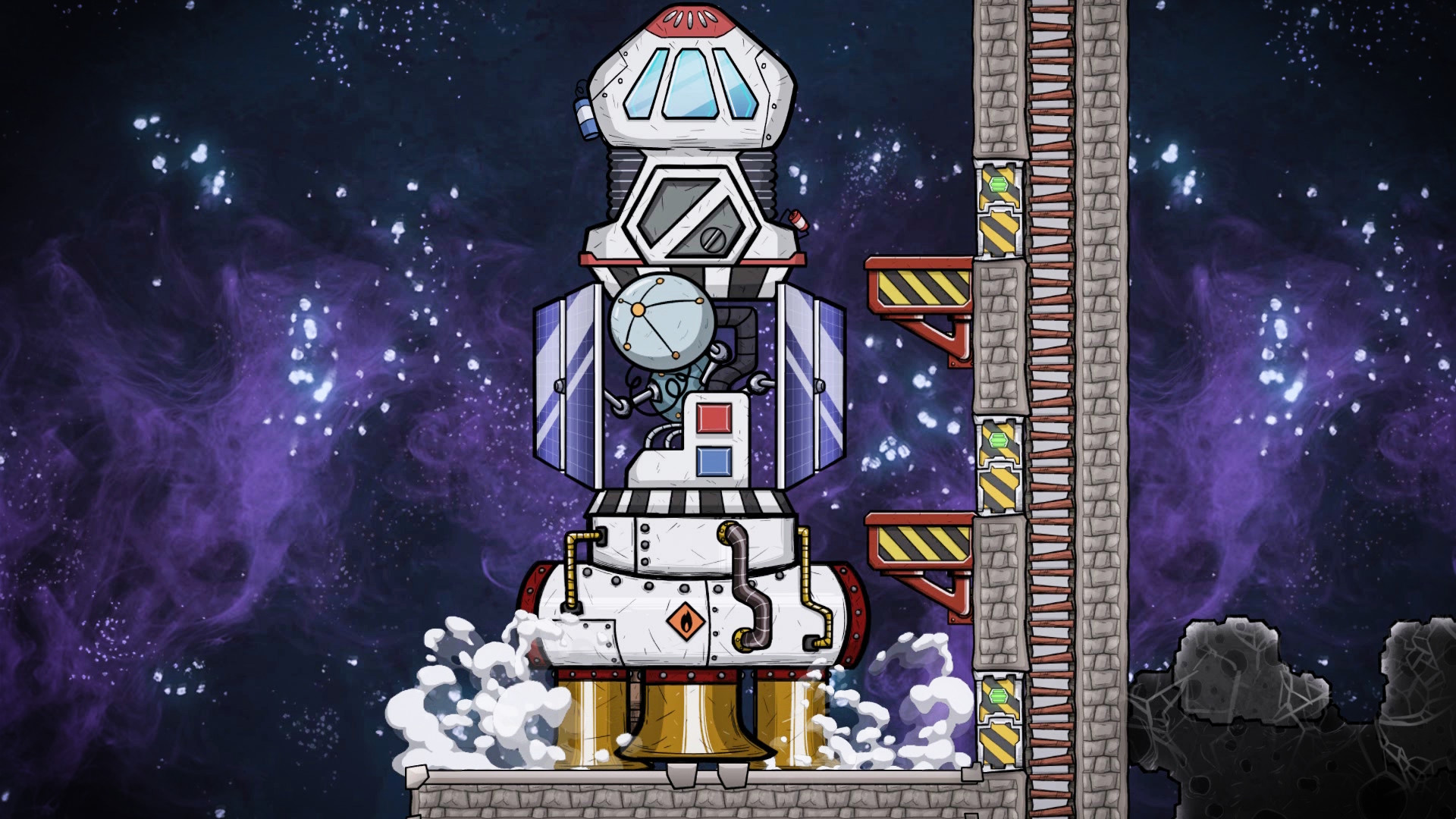
This guide is very unlike any of my other guides. I won't be providing step by step instructions on how to build anything, instead it's really two different guides in one, that I'm publishing for two specific purposes. A "Not Quite" Beginner's Guide This won't be a traditional beginners guide in terms of "first build outhouses, then cots, then get down meal lice and oxygen diffusers before you starve or suffocate". Actually, I guess there it was, there's my beginner's guide to the first 10 or so cycles of ONI :) Instead, I'll be sharing what might be considered unconventional opinions on how I approach a colony in ONI. My recommendations lean towards optimizing for higher difficulties, achievement runs, and more challenging starting planetoids. A hyper min-max approach isn't even remotely required to succeed, but learning good habits early will better prepare you for what the rest of the game can throw at you. I specifically focus on the starting dupe team and then what kind of dupes to add along the way. You've almost certainly heard that your starting team should consist of one or two builder/diggers, and then probably a researcher or rancher. One version of a "dream team" in that regard might look something like this: The advice above is generally good, and honestly on the normal difficulty and the Terra asteroid you could easily survive with a narcoleptic starting team of doctors, decorators and chefs. That's not meant to cut anybody down or say that the game itself is easy. We've all failed on numerous starting colonies, but the basic survival mechanics of managing oxygen and food aren't really changed by having a dupe with +15 digging instead of +1. In my colonies I would never take dupes like the three above To be fair I certainly used to! All my early colonies were loaded with these dupes, following the common online advice. This guide will explain why my approach has changed and provide alternative recommendations. I'll describe the more subtle mechanics of stress and morale, which can be unexpected killers after food and oxygen are taken care of. This will help prepare you to tackle rocketry and colonization of other planetoids in the Spaced Out! DLC. Those mid-game objectives can be challenging for many players, but a simple change to your dupe selection approach can position you for the best chance of success. Lets Play! This might be an interesting and unique part of the guide, or might be a total flop. I recently ran a colony to playtest a new SPOM design before publishing my Easy Submerged Electrolyzer / SPOM Guide . I thought I'd go for the Super Sustainable achievement at the same time, to make sure I could reliably run the entire base off the hydrogen from the new SPOM. I had a wild idea to take screenshots every 5-10 cycles for the first 100 cycles and share what I was thinking at the time, what my next objectives would be, etc. Kinda like a Lets Play! video on YouTube or Twitch, but infinitely more boring since you have to read it :) I also thought this might serve as a showcase for my other ranching guides, and maybe for a couple useful builds I've borrowed from other designers. Something about seeing someone else build designs in a real game can be different from the sterile nature of a "how to build this" guide. It might also shed light on "when" I start thinking about building those systems, so you don't get caught surprised on cycle 50 with overheated plants and no food. I'm not claiming that the way I play the game is best, or even "good". I'm not particularly a "fast" player either. People launching rockets on cycle 40 are impressive, but you won't find that here. I tend to get distracted by multiple large projects and waste dozens of cycles before I come back to finish them. It took me about 50 cycles to even get flush toilets up this game! That said, I think there could be value in seeing someone else's thought processes, seeing them make mistakes (and hopefully not die from them), even seeing how long I managed to drag this artificially power-limited colony on (for the achievement) without rushing into the midgame for steel, rockets or new planets. Nobody forces you to play ONI quickly, unless of course you're going for the Carnivore and Locavore achievements :) As I said above, this section won't be about early game food and oxygen production. The thing is, on default difficulties, once you've failed a few times and learned the basic mechanics it's really not that difficult to get a colony going. As you're learning the game you're absolutely going to lose colonies for one or all of these four reasons: You didn't notice you were running out of algae to make oxygen and everybody suffocated You didn't notice you were running out of dirt to grow plants and everybody starved You didn't notice your base was slowly warming from all the machines, so your plants overheated and everybody starved You took too many dupes too quickly - they ate all your food and everybody starved Anyway, we've gotten those early learning games out of our system, and we now know how to transition to electrolyzers and hatches for oxygen and food that can't overheat. That should last several hundred cycles until we run out of either water or rocks and need to figure out the next level of sustainability. That's far beyond the scope of a "beginner's" guide, so in the meantime, what's the next big threat to our colony? Depending on the difficulty settings, and how disciplined you are about managing morale, the most likely thing to destroy your colony next is probably stress. Stress is a mechanic that you'll either never notice or it will cause you to enter a death spiral from which the colony can never escape. On the default difficulty, dupes with no debuffs will accumulate 0% stress per cycle. This can be raised to 10% (Glum) or 20% (Frankly Depressing) using the difficulty slider in the game settings. Any time a dupe obtains a debuff they will receive a temporary increase in stress. For example walking through a puddle will give them Soggy Feet and cause +10% stress for 0.2 cycles, which effectively adds a total of 2% to the stress meter. Every night as the dupe sleeps they'll relieve stress at a rate of 20% per cycle for about 3 schedule blocks, removing about 2.5% total stress from the meter. If a dupe's stress meter reaches 100% they'll stop what they're doing and have a stress reaction for several schedule blocks, such as vomiting or binge eating. After the reaction the meter is reduced to around 50-60%. I want to pause there and reinforce the concept. Let's assume you're the most benevolent colony manager in the world, pampering your dupes to make sure they never receive a single debuff. On the hardest difficulty level the meter would still climb by 17.5% per cycle just for being alive, after factoring in sleep removing some of the default stress. For the first 3 cycles you get the free New Hope stress reduction buff which nicely cancels this out. After 6 more cycles (cycle 9) each dupe would have a stress reaction, reducing their meter to ~60%. At that point you begin a spiral of repeating stress reactions every 2.5 cycles or so. In a normal colony you'll have small buffs and debuffs affecting stress on individual dupes, so they won't all be synced up like the above hypothetical. Below is an example of the stress tooltip showing these adjustments. Once a dupe or two starts screaming or puking everywhere, that can cause additional stress on other dupes, potentially sending them over the edge as well. Even worse, dupes having stress reactions won't perform tasks (like running on hamster wheels, or harvesting food) potentially leading to failures in other parts of the colony that were previously working fine. Side effects of the stress could include puke breaking an important liquid lock or getting into a clean water reservoir, or a destructive dupe totaling a critica
ИсточникGHub Platform · автор25.08.2026, 19:13:58
This guide is very unlike any of my other guides. I won't be providing step by step instructions on how to build anything, instead it's really two different guides in one, that I'm publishing for two specific purposes. A "Not Quite" Beginner's Guide This won't be a trad…
Войдите, чтобы писать в группе