Pact for Beginners (A comprehensive guide)
GHub Platform · Гайд · 0 ответов · 43 просмотра
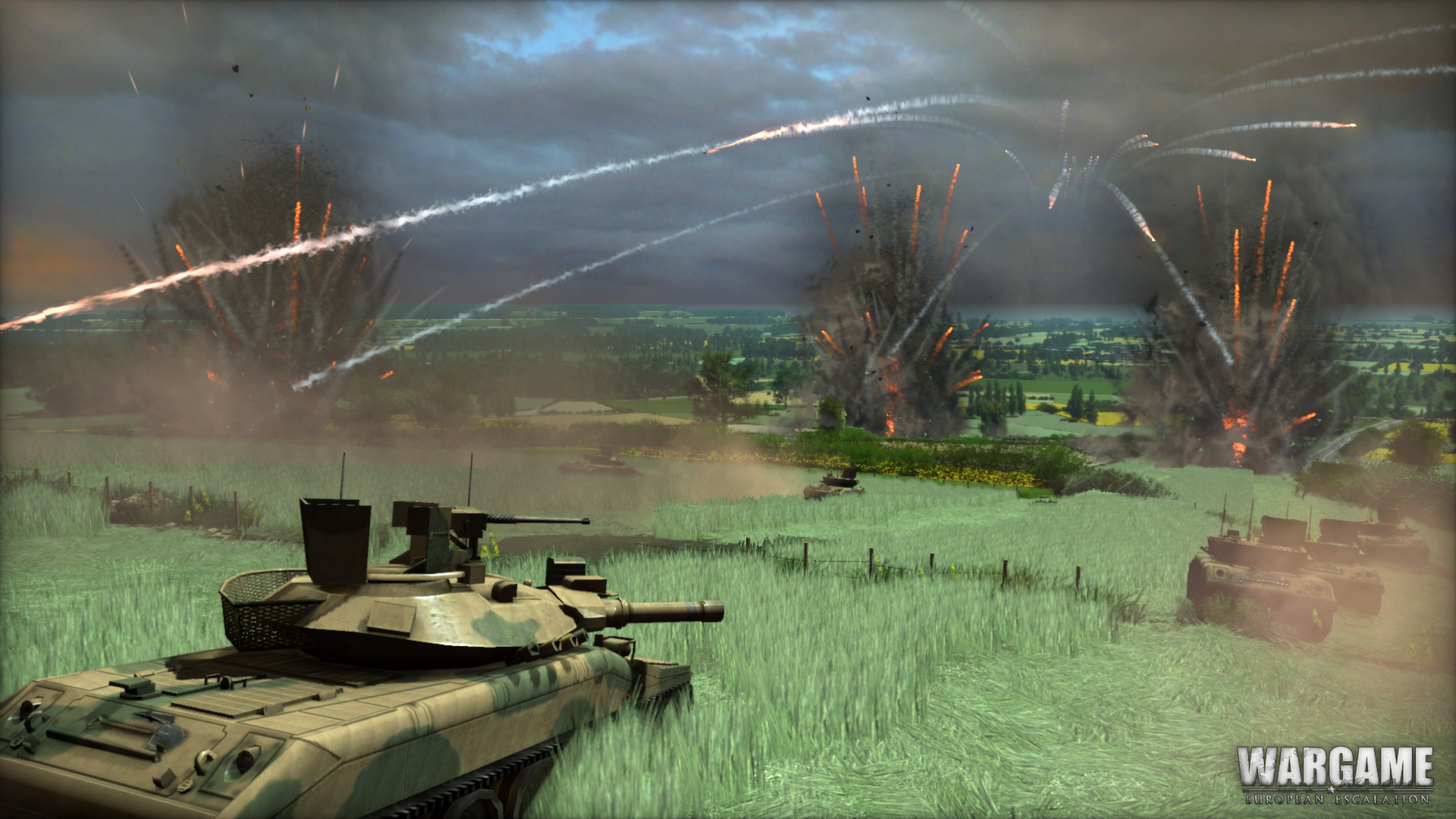
This guide is a comprehensive introduction to Warsaw Pact. If you want to learn to play Pact, this is a thorough guide that should cover enough to let you know to play Pact and play it well. Whether you're just not familiar with Pact or getting started with Wargame overall, there's all the information you need. With the information in this guide, you can be confident going into multiplayer because you will have the theoretical knowledge to win against most players. Basic Strategy (for total beginners) is just that. It covers the basics of the game, how the mechanics work and how all the basic units work with each other in a multiplayer context. Playing the first two or three singleplayer missions is recommended as they act as a tutorial and get some stars to unlock units. It's a huge fraction of the length of this guide and may contain useful information for even experienced players, but Basic Strategy (for total beginners) can be safely skipped by players with experience playing W:EE. Basic Strategy (for Pact beginners) is a guide to how Pact works as a whole and assumes you're conversant about the basics of the unit types and basic strategy. Beginner Deck is a deck designed to be unlocked quickly and offer the maximum of good options for a player learning the game without buying units that won't be used later on. For the cost of 15 stars it'll let a player win fights. Unit Guide is a quick overview of the units Pact has available. It will not be comprehensive at the start, instead pointing out the best choices for a learning player with an eye towards discussing tactics and how they work. Sample Advanced Deck is a sample deck of 25 slots using the units covered in the Unit Guide. It is just one of many possible solutions but it's one the author of this guide has used extensively and hasn't been let down yet by. This section is merely an overview of unit types and how they interact so that even a total beginner will be speaking the same language I am. Pact especially is all about combined arms. Some things look very good on their own but don't work well as part of a greater whole. Some things are incredibly fixed purpose and look cripplingly overspecialized. There's also a bit of basic game mechanics that can make a tiny difference huge. The first and most important lesson of Wargame is that combined arms win games. If you're using your units together so their strengths reinforce each other, you're going to come out ahead of the other guy. 4 infantry with good artillery support can and will ruin an attack by 20 tanks if it has artillery support to get them panicked beforehand. Even the heaviest tanks can be killed quickly and effectively if attacked from different directions since front armor is about a 40 degree coner. When engaging, make sure you either have the morale or position advantage, preferably both. Both will make your force significantly more effective than the enemy. Micro doesn't win battles nearly as effectively as macro three minutes ago. With that in mind, it's time to go over the basic unit types, basics of terrain and how they interact. Terrain Terrain is very simple, it's comprised of six basic elements, roads, open fields, forests, cities, hedgerows and hills. Roads let you move much faster, they're strategic terrain but don't have much importance on a tactical scale. Hedgerows don't provide much cover, especially when perpendicular to the enemy because there's no depth to them. The main use for them is sticking recon infantry in them because they're very stealthy and can hide there well. Open fields are the default and generally serve as a no-mans-land. Unless you have no other choice, leaving units in the open with no cover in sight is a bad idea in the extreme. That leaves cities, forests, and hills. These are the foundation of defensive terrain. They work similarly in general. Infantry are devestating when using them for cover and engaging at close range, Tanks work best with one to pull behind as a shield, and they offer the best way to break line of sight and gain a refuge from artillery. Forests and Hills have similar effects on line of sight. If you pull right up to the edge, you can be seen, but you can pull back and hide. Forests still provide line of sight concealment at the edge, but it's slower to fall back into a forest than back from a hill. Infantry is great in such cover because their short range is enough to hit targets from such cover with their fast aiming and powerful LAWs. Tanks are at their best when able to strike from behind cover to get flanking shots on enemies' vulnerable side armor. All units are able to get refuge from artillery behind heavy cover. Heavy cover is a base from which your forces can attack or defend. Heavy cover is terrain control. Morale Morale is your units' combat effectiveness. Damaging your enemies' morale is a quick way to render them combat ineffective and win battles against notionally superior forces because they can't return fire effectively. Units with damaged morale fire more slowly, aim more slowly, are less accurate, and are generally free points. Artillery is not effective at destroying units unless massed to the point that a balanced force could drive right to the enemy base and destroy it all (not actually an uncommon sight). It is amazingly effective as a force multiplier because it attacks morale. Morale is also destroyed by direct fire, miss or hit. In that case, when attacking vehicles, any sufficiently close shot (so most gun shells but only some ATGMs) will damage morale in an area. This means that spammy blobs can be sniped and their accuracy degraded until they are combat ineffective, and that it's usually best to keep your forces dispersed, otherwise your untis' morale will be severely damaged. Using units in 4s is perfectly acceptable because they get bonuses to counteract this, but best practice is to use cheap units in 2s and expensive critical ones solo, with only rifle/LAW infantry in 4s. (Don't worry, using them in 4s is perfectly fine until you get to the very top end, just keep in mind the point about keeping your forces dispersed). The key to morale more than anything is that any force that could be engaged on its own needs to have multiple seperated components so it doesn't get shelled, routed and ruined ineffectually. Recon Recon is the most important unit type in the game. Without recon, the enemy can find your location, scout your positions with impunity and set up the perfect attack before you even know where to look. The first warning you get of an attack will be an artillery barrage shattering your key units before the enemy comes rolling in in just the wrong place for your units. With good recon, you can do this to an enemy or when they attack have your units set up so that their effectiveness steadily degrades as their units keep going into traps, their heaviest units blindsided and killed with ease. Recon comes in three basic types: Infantry, vehicle and helicopter. Infantry recon : Infantry recon is only spottable at the range where they can open fire. That's really close. They're really fragile though. If there's a weird isolated position with only a tiny bit of cover, infantry recon is your best bet for getting eyes in there. If there's a piece of heavy cover that is unlikely to get shelled or is just too far forward to risk something more visible, infantry recon is your best bet for getting and keeping eyes there. Fast transports are vital, whether they're ground or helicopter. Vehicle recon : Vehicle recon is good reliable recon. If you want recon that can move with an advancing force well and take up positions near your troops, vehicle recon is very good for that job. It can move without keeping an APC nearby, and has its view range while on the move. There's not much more to say because it's pretty much the baseline. Helicopter recon : Helicopters have long clear lines of sight and are fast, both of which are very appealing. Howev
ИсточникGHub Platform · автор26.08.2026, 02:26:19
This guide is a comprehensive introduction to Warsaw Pact. If you want to learn to play Pact, this is a thorough guide that should cover enough to let you know to play Pact and play it well. Whether you're just not familiar with Pact or getting started with Wargame overall, there…
Войдите, чтобы писать в группе