Signalling guide (UK/DE/US)
GHub Platform · Гайд · 0 ответов · 5 просмотров
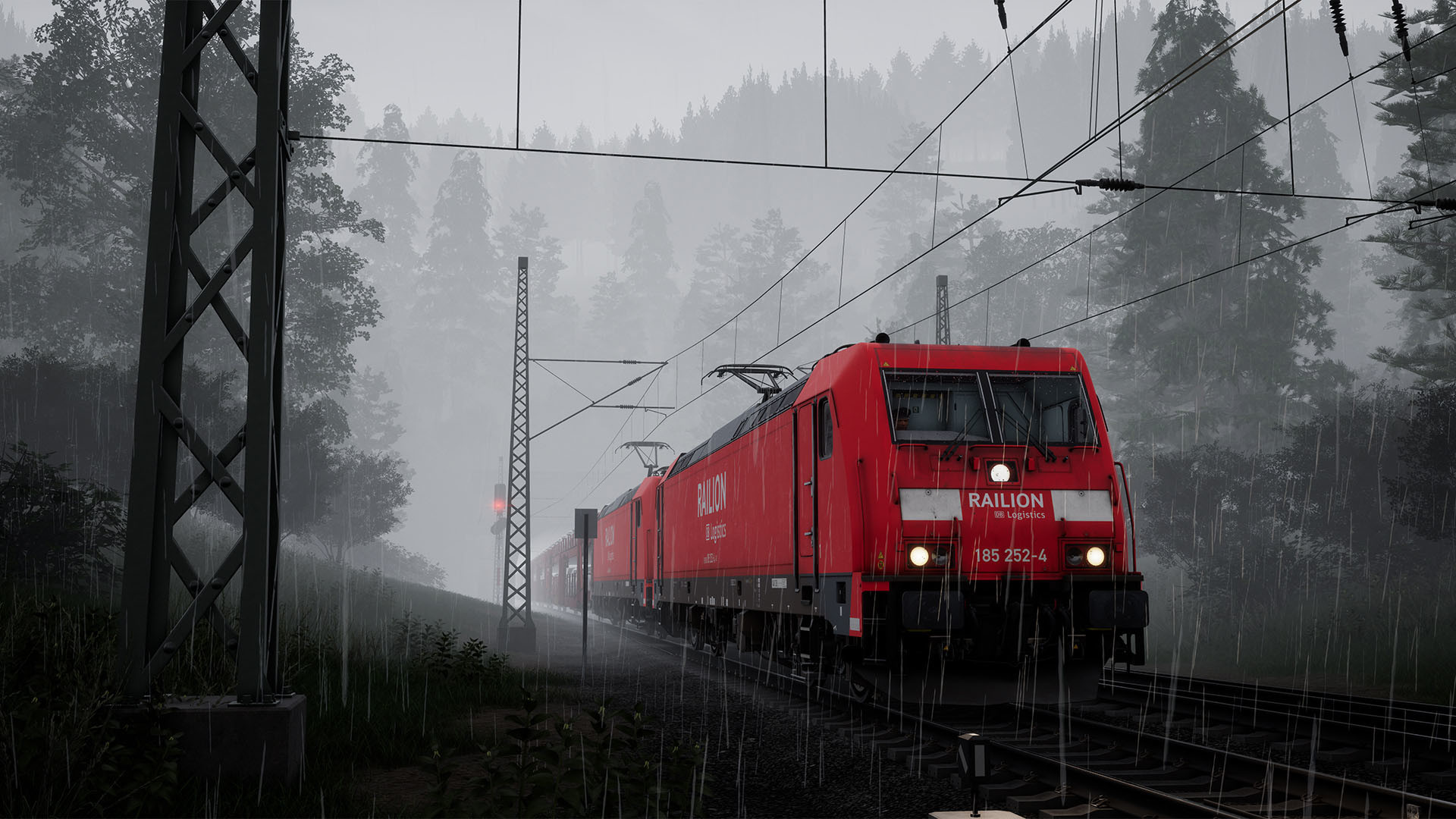
UNDER CONSTRUCTION I plan to explain the signalling systems for the UK, Germany and US in a basic way, without overcomplicating stuff. I'm trying to cover both light signals and semaphore signals, and perhaps some stationary signs. Position of signals Signals are usually located on the same side as the trains drive. So on countries where trains drive on the left side, such as the United Kingdom, signals are placed left of the track. In countries where trains drive on the right side, such as Germany and the United States, signals are placed right of the track. Exception is railways with two parallel tracks. In that case they're placed on left side of the left track, and the right side of the right track. The UK probably has the easiest signalling system as signals do not give any speed restrictions. A single green light means clear A double amber light (two lights above each other) means the next signal is showing a single amber light A single amber light means the next signal is showing a red light A red light means danger . You should not pass this signal. A red light with one or two white lights means danger , but slow speed movements allowed. Basically it means you should drive slow enough to stop for any obstacle. It's often used whenever the track is occupied by a formation you should be coupling to. A double flashing amber light is used to let you reduce speed because you're being diverged into a sideline with a lower speed limit. Static signs should tell you the speed limit. This signal is followed by a single flashing amber light. A single flashing amber light is used to let you reduce even more speed because you're being diverged into a sideline with a lower speed limit. The next signal will display an illuminated feather to indicate to which track you're being diverged. This image shows an example of such a feather signal. [dtl-ghost-storage-bucket-prod.storage.googleapis.com] A single flashing white light is used to indicate the level crossing ahead is safely closed for road traffic. or When a signal is fitted with an illuminated number, the number indicates the track you're being routed through. It's used instead of a feather and common on those places with a lot of tracks. Alternatively an alphabetic character may be used to indicate the route being set for you. Repeater signals are used whenever the view on the next signal is obstructed. Repeater signals indicate the aspect the next signal is displaying. When a repeater signal shows a white light with a horizontal black banner, the next signal is at danger (red) and you should expect to stop. When a repeater signal shows a white light with a diagonal black banner, the next signal is at caution (amber). When a repeater signal shows a green light with a diagonal black banner, the next signal is at proceed (green). There's two types of semaphores in the UK. Red ones are main signals, indicating wether the line is clear or at danger (comparable to a green, or a red light). Yellow ones are distant signals, indicating the state of the next main signal (comparable to a green, or an amber light). When in a horizontal position, semaphores are in their restrictive position (caution/danger aspect). When in a diagonal position, semaphores are in their safe position (clear). Semaphores may be fitted with small colored lights, but those aren't as bright as modern light signals. This is a distant signal giving you a clear aspect. Basically it's comparable with a green light. UK distant semaphore signals can protect one or more main signals. This distant signal indicates all main signals up to the next distant signal are clear. This is the main signal giving you a clear aspect. It's comparable with a green light. This is a distant signal showing caution aspect. Because distant signals can protect one or more main signals, it's possible that the next main signal still shows a clear aspect. You should however expect at least one of the main signals to show a danger aspect, until you pass another distant signal. This is the main signal showing danger aspect. You may not pass. It's comparable with a red light. Combination of distant and main signals Main signals can also be fitted with a distant signal. In such a case the distant signal will tell you the state of the next main signal. For example: This is clear aspect on the main signal and another clear aspect on the distant signal. You're clear to proceed and can expect the next main signals to also be clear. This is a clear aspect on the main signal, but the distant signal on caution aspect. This means you're clear to proceed, but should expect to stop at an upcoming main signal. This is a danger aspect on the main signal. You're not allowed to pass. You can ask the signaller for permission to pass, but should expect the next main signal also to be at danger. Multiple signals for diverging tracks At yards or switchovers it's likely that there'll be multiple semaphore signals. They will be placed next to each other and each represents the routes your train could take. One signal will be located higher than the others and will represent the main line. For example: The upper signal is showing a clear aspect, which means you will be routed over the main line. The upper signal is showing danger aspect, but another one is showing a clear aspect. This means you will be routed over to a side track. Many of those have a lower speed limit. There's usually signs indicating what exactly the speed limit is (or you can rely on the HUD). "Whistle" sign, most commonly found on modern routes. "Sound whistle" sign, most commonly found on historic and heritage routes. In Germany there's two systems which are pretty similar in how they work, but there's variations on what the aspects look like. The Vr/Hp signalling system relies on a distant signal, or "Vorsignal" in German, informing you about the state of a main signal, or "Hauptsignal" in German. A distant signals only job is to inform you of the state of the next main signal. As such a distant signal is important as it gives you new information. The main signal should not have any surprises for you. To warn you a distant signal is near, there are boards with diagonal stripes counting down as you get closer to the distant signal. Distant signals are marked with a white sign showing two triangles pointing to each other, forming a cross. "Vr" distant signals ("Vorsignal") On the most common signalling system used in Germany, distant signals have their lights in a diagonal position, which makes them distinguishable even in the dark. A green-green distant signal means the next main signal is displaying a green light, which means the line is clear and you can proceed. A green-amber distant signal means the next main signal is displaying a speed restriction. By default this restriction is 40km/h, unless the signal is accompinied by a number. When a green-amber distant signal is accompinied by a number, located below the signal, the number gives the speed restriction in units of 10km/h. So when the number 6 is displayed, the speed restriction at the next main signal is 60km/h. This number is often an illuminated signal, but could also be an ordinary sign. An amber-amber distant signal means the next main signal is displaying a red light, which means you need to stop at the next main signal. In my experience the distance between a distant signal and a main signal is 1km. When a distant signal is accompinied by a smaller white light like in the image above, it means the distance to the main signal is shorter than usual. There are places where there are multiple distant signals before the main signal, especially on places where the line of sight on the main signal is blocked. Any follow-up distant signals will have such a small white light, and will not be announced by the distance beacons (the signs with the stripes counting down). "Hp" main signals (&q
ИсточникGHub Platform · автор30.08.2026, 11:00:01
UNDER CONSTRUCTION I plan to explain the signalling systems for the UK, Germany and US in a basic way, without overcomplicating stuff. I'm trying to cover both light signals and semaphore signals, and perhaps some stationary signs. Position of signals Signals are usually located…
Войдите, чтобы писать в группе