General 'real life' tactics that work in Insurgency and any other tactical shooter.
GHub Platform · Гайд · 0 ответов · 19 просмотров
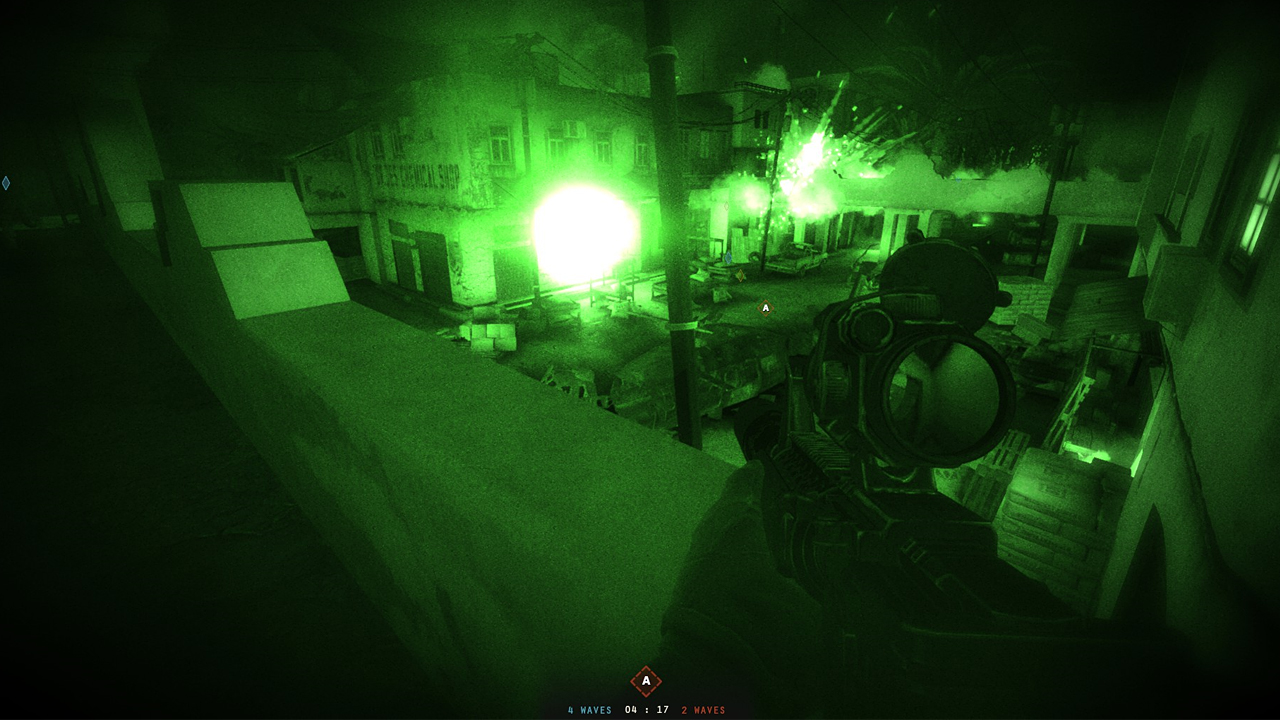
To start off, I'll discuss some general tactics for the lone wolf, before moving on to more team-based oriented tactics. This is ofcourse because of the nature of public multiplayer in general, because you won't be lucky enough to find yourself in a team that uses VOIP to communicate and coördinate. Therefor sometimes you might find yourself on your own or playing alongside but independant of others in your team. But by employing better tactics as a lone soldier you'll be a bigger help to your team when you do manage to set up a communicating fireteam, as hopefully you won't get shot right away. These are general tips and basic principles that will work in any tactical game. Pictures are courtesy of www.tangodown.nl , a Dutch tactical gaming community which I am a part of. One of the pictures therefor has a Dutch title, but with the description I added above it you'll get the point. In addition, in the sections below I mention cover and concealment, but ran out of space to go further into it. Wherever I refer to cover, I am talking about hard, solid objects, preferably impenetrable like thick concrete walls, but this also refers to cars and such. Concealment on the other hand is, like the word says, something that merely hides you from plain view. This refers to trees, bushes, and any other object that will give you the same amount of protection as a smoke grenade would... Generally speaking you will always prefer hard cover over soft concealment, because when the enemy does a 'probe by fire' (randomly picking targets and putting a few rounds into them in the hopes of getting a kill), concealment won't do anything to protect you. So maybe your team doesn't communicate and work together. Maybe your entire team got shot and you are all that's left. In both cases, you'll have to fight for yourself, and while the odds will be stacked against you, you might come out on top. A. The art of seeing without being seen. (AKA Situational Awareness) The best way of surviving combat is ofcourse to not be seen. Insurgency maps are rather smallish (especially compared to a game like ArmA or even Rainbow Six: Raven Shield, or the original Ghost Recon), but there are still plenty of ways to conceal yourself while stationary or while moving. Primary among this is ofcourse keeping a low profile. Kneel or go prone where ever the situation allows for it to keep yourself out of sight. This might not always be the best option! If you find yourself in a small room for instance, you might not be able to get out fast enough when an enemy soldier throws a frag grenade into the room, especially when he 'cooks' the grenade. I make it a general rule to only kneel in urban environments, unless I find a particularly nice spot in which to hide that calls for me to go prone. I generally only go prone in outdoor environments. When you move, move from cover to cover. Once your back in cover, do some 'tactical waiting'. Whereas in other games you might be called a camper for sitting still behind cover or waiting in a corner, those games generally have higher moveability for the player, and you can get away with being a bit reckless. Thus sitting and waiting in corners can be considered cowardly. But in a game like Insurgency or other tactical shooters, the fact that you move slower and you'll die very quickly from a hit or two, changes this completely. Ofcourse, this is no excuse to just sit in a corner for an entire round, especially if you are the last man left. But a tactical shooter is a game of mice, and thus of waiting for someone to make that first mistake that gets him shot. Move forward, but do so sensibly: from cover to cover, peak out before you move again, and scan your environment for movement as you go. Move methodically. This is absolutely critical to seeing without being seen, and thus the difference between being the shooter and the one getting shot. Take care that you don't move too much while in cover, because movement gives you away. But as a sidenote, don't move too little either. If you sit TOO still you can't keep a proper eye on your surroundings, which means you might get flanked. Avoid tunnel vision, but be methodical in your movements. Maintain situational awareness at all times! B. Outdoor environments. Pay attention to your surroundings. While it is easy to hide from sight completely in urban environments, in more open environments like you'll find on the map Peak it is far harder. A major issue here is called 'skylining', which is the act of standing on the crest of a hill with just the sky behind you as a backdrop. This makes you stand out like a sore thumb, and will get you shot within seconds. Generally you'll want to stay away from the tops of hills, either standing just behind them to shoot over it (in which position you can see, but also quickly kneel back into cover when shots are returned in your direction). If you can, make sure you have a background that isn't sky. Desert camo and clear blue skies don't mix well. To counter that statement, ofcourse hilltops provide the best overview. Walking through a valley gives you tunnel vision, as enemies might move to your left or right without you knowing it. Try to find a happy in-between. In addition, keep in mind that objects that offer you cover or concealment come in two forms: hard edged en soft edged. This being a difference for instance between a rock with a smooth surface, or a bush with branches sticking out on all sides. Standing behind the rock might get you noticed sooner, because your silhouette does not blend in with the environement. However, hiding under trees with low-hanging branches or behind bushes is an excellent way to break your silhouette, which makes you less recognizeable as an enemy combatant. C. Close Quarters Combat. As I said earlier, hiding in CQB is much easier than a sparse outdoor environment like Insurgency's deserts. All it takes is for you to step to the side or duck, and depending on if you haven't backed yourself into a corner and you have some directions left to take, you could be anywhere. You could be taking a big detour, or simply be waiting a few seconds to let off some rounds again. That said, there are still some things to consider while fighting in close quarters. One example is windows. Don't stand too close to them, or your barrel might stick out. Then all that needs to happen is for an insurgent to notice this and toss in a frag grenade. Stand more towards the back. Though you'll have less vision this way, you'll be hidden among the darker shadows farther into the room and your barrel can't give your position away. In real life, or in a game like Red Orchestra 2, this has the added effect of the room muffling your gunshots, making it harder to pinpoint your location by sound. As with the outdoor environment, consider hiding your silhouette. For example, if you stand at the corner of an undamaged building with a straight wall, your body will stick out against the straight edge. Things in nature are never perfectly straight or round (or maybe with a really big exception), but those walls are. Thus you will stand out. Instead, try finding broken walls that you can peak through. Because of it's jagged edges, another discrepancy in it's shape won't stand out so much. Find small holes that can be used to fire through, or shoot from under cars. Minimize your exposure as much as possible. If there are no broken walls around, try finding objects that might accomplish the same effect as a bush. Grenades are another major resource for you to use. If you don't feel safe peeking out, throwing a grenade, flashbang, or smoke grenade to kill, blind or distract your enemy might save your life. You can bounce them off of walls, so you won't have to expose yourself. During the siege of Stalingrad, Soviet soldiers were ordered to throw at least two frag grenades into each room before entering, either killing, wounding or dazing the enemy and greatly enhancing their own survi
ИсточникGHub Platform · автор06.09.2026, 21:19:57
To start off, I'll discuss some general tactics for the lone wolf, before moving on to more team-based oriented tactics. This is ofcourse because of the nature of public multiplayer in general, because you won't be lucky enough to find yourself in a team that uses VOIP to communi…
Войдите, чтобы писать в группе