Things I wish this game told you sooner
GHub Platform · Гайд · 0 ответов · 20 просмотров
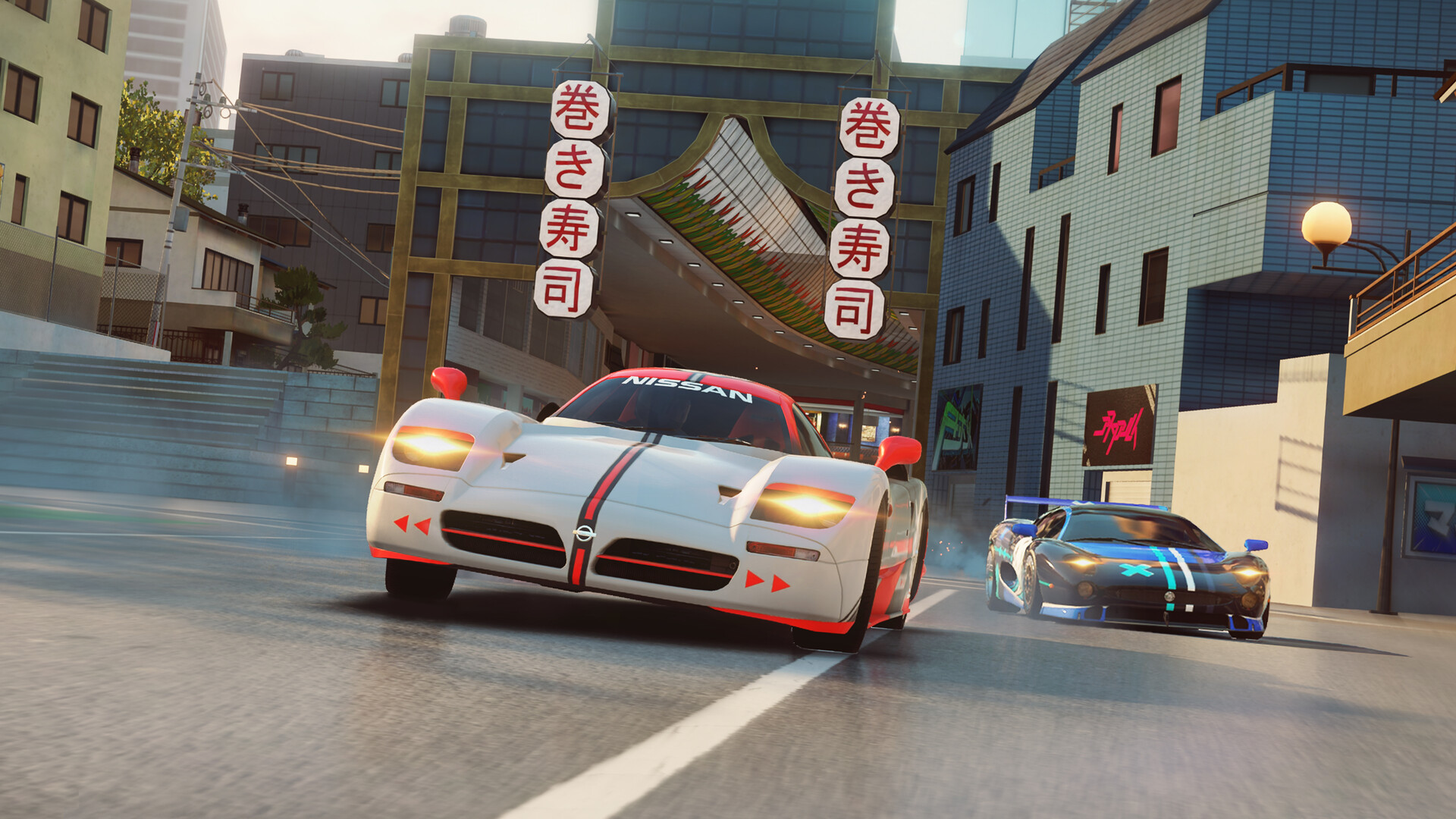
The tutorial completely mislabels and gives outright misinformation about how nitro works. Here's how Nitro actually works. Universal Details Nitro influences your car in four ways. Acceleration rate, the top speed of your car, its toughness and its "grip factor" . Not its handling. That's a different thing. Top speed with Nitro on is identical for all types. Nitro types only influence your acceleration rate and your grip factor. Your priority should be to boost as much and as long as possible except in certain situations we'll explain below. Standard / Yellow Use this whenever you're not cornering . A car with a good nitro stat should be able to basically boost in Yellow at all times as long as you're drifting in every corner you can drift, near-miss every traffic car, and take every jump close to optimally. Do not use it right out of corners until you have finished angling yourself properly, you'll lose a bunch of nitro for no real effect. You can only boost immediately out of a corner if you have very high (80+) Handling, and even then you need to be careful about it. In short, Yellow has • Drain rate 1 • Accel + • Grip - "Perfect" / Blue Perfect Nitro's use is mostly to exit or navigate difficult corners and cross slowdown terrain. If you're not doing either, you don't need to be hitting Perfects. The keyword for Perfects is anticipation . By default you will waste 3-5% of your bar at minimum just to turn it on, so be well aware of what is coming up so you trigger it on time. Perfect Nitro offers no other speed benefits outside of preventing slowdowns that would impact other nitro types, and for cheaper than Shockwave does. Perfect is for preserving speed , not gaining it, unless you're exiting a corner. In short, Blue has • Drain rate 2 • Accel + • Grip + Afterburner / Red The tutorial says nothing about this one which is kind of ridiculous when it's probably one of the most important types. Afterburner is all about accelerations, so use it in straightaways and jumps . Using it to recover from a corner as you're still angling will not only lead to you wasting a bunch of Nitro, it will also make you corner worse and lose speed on top of that. If you're hitting any air for more than a split second, you need to be hitting Afterburner the moment your wheels take off . As your air time is limited, getting the most accel so you can approach your airborne max speed is paramount. In short, Red has • Drain rate 3 • Accel ++ • Grip -- Shockwave / Purple Shockwave is depicted as being the "fastest"... Which is not only completely incorrect, it's also misleading. Shockwave has a very specific effect, outside of being a combination of Red and Blue, that makes it useful: It's the only type that increases your car's toughness , allowing it to survive collisions with other vehicles and objects from the side more reliably. Be mindful that angle is incredibly important. If your front bumper touches a wall during shockwave you're probably more likely to wreck than you are using yellow. Shockwave should be used strategically in full-contact races so that you can survive someone attempting to crash you off the track. Otherwise you're wasting nitro outside of using a more appropriate type. The notable exception is exiting very nasty corners, such as very tight hairpins with lots of rough terrain. However, if you need shockwave for that, you're compensating for handling that's too low for this track. In short, Purple has • Drain rate 4 • Accel ++ • Grip + • Toughness + Getting airtime and using it efficiently is one of the main ways of getting a ton of speed and catching up/staying ahead. However, poorly approached air is also the best way to completely eat crap and ruin your entire run. Why Your airborne top speed is significantly higher than your grounded top speed. You want to spend as much time as possible going fast. So you want to get airtime that is both long AND has a good trajectory that doesn't send you on a ridiculous parabola that wastes your time. Types of ramp and what to do with them Ramps have more or less 4 types of elevation: • Bump (short hops, like in Singapore) • Low (about the height of your car) • Steep (more than the height of your car) • Supersteep (about twice or more the height of your car) Generally, the height of a ramp correlates with the airtime you'll get out of it. Bump ramps are generally obligatory to cross anyway. Ramps can be flat or slanted, in which case they are barrel roll ramps. You take flat ramps by spinning on them. You take barrel roll ramps by driving into them. From the side that is the lowest first, of course. Otherwise it's a wall. Approaching a ramp There is one ideal way of approaching a ramp: Head on and slightly offset to the side of the road that has the most space , especially if it's a flat ramp. This is especially true if the ramp has obstacles directly against it, as trying to spin on it might just cause you more trouble than it's worth. This is also especially true if you're hitting a supersteep barrel roll ramp, as those can send you further up that they do forwards, and that's a huge time loss. Sticking your landing Pay attention to where you're going as to not land, even partially, on an obstacle such as a fence, that either instantly explodes you or bounces you off at a weird angle that'll either kill or stall you. When you take a barrel roll ramp, the number of rolls you'll get if taken properly is based on how far and high you're expected to go, assuming your angle does not change midflight . This means that if you turn during a barrel roll jump, you may land on an elevation that is too high for your roll to complete. In VERY specific cases, you can 360 before landing to slightly angle yourself better, but this is hugely unreliable. Gaining Nitro from air Airtime gives a trivial amount of nitro, with only 80+ Nitro stat letting you keep up with Yellow as you jump. Try your best to take all jumps while spinning or barrel-rolling. You must initiate the spin before you hit the ramp because you can't drift in midair. Usually. Sometimes you can, it's weird. The only exceptions are if • Short flat ramp OR (all below at once) • You are about to take a flat ramp at full speed • Have high nitro • Are in a competitive position against someone nearby. A 360 has a small speed loss, and if you have nitro to spare, taking it straight on is a speed advantage. What Nitro for a ramp When hitting a ramp, use your afterburner/red. You want as much acceleration as possible so you can reach that airborne top speed, or at least get close to it. Try to have a bit of nitro to initiate a ramp, otherwise your nitro will stall for a moment and you're losing potential speed. If your nitro stat is low, first of all, don't drive a car that has a low Nitro stat , second, wait for whichever Nitro gain type you're going for (roll or spin) to give you one tick of nitro gain, THEN use your afterburner. Treacherous Ramps Some ramps are absolute bastards and consistently lead you into some weird nonsense that makes you crash if you don't know exactly what you're doing. Notorious examples are: • Almost any bump/low barrel roll ramp, especially those on Singapore and Vienna, which will lead to a half-roll unless taken PERFECTLY, leading to a crash. • The ramps leading to the suspension bridge on Midwest, which has a massive, invisible deathplane above the suspension cables. • Some supersteep ramps on Himalayas that are so steep that they make you lose lots of speed from the parabola's trajectory (this is why you take them offset) • The ramp from the dam in Arizona that leads to the hairpin corner with the semi truck on the inside. If you 360 too late, you WILL hit the wall at a bad angle and stall. • Generally flat ramps that lead straight into harsh corners, where it's likely that your spin will end against a wall and make you stall. • Absolutely everything in Greenland that has a stage hazard (volcano, airp
ИсточникGHub Platform · автор11.09.2026, 14:55:12
The tutorial completely mislabels and gives outright misinformation about how nitro works. Here's how Nitro actually works. Universal Details Nitro influences your car in four ways. Acceleration rate, the top speed of your car, its toughness and its "grip factor" . Not…
Войдите, чтобы писать в группе