Game Tips and Strategy Guide
GHub Platform · Гайд · 0 ответов · 17 просмотров
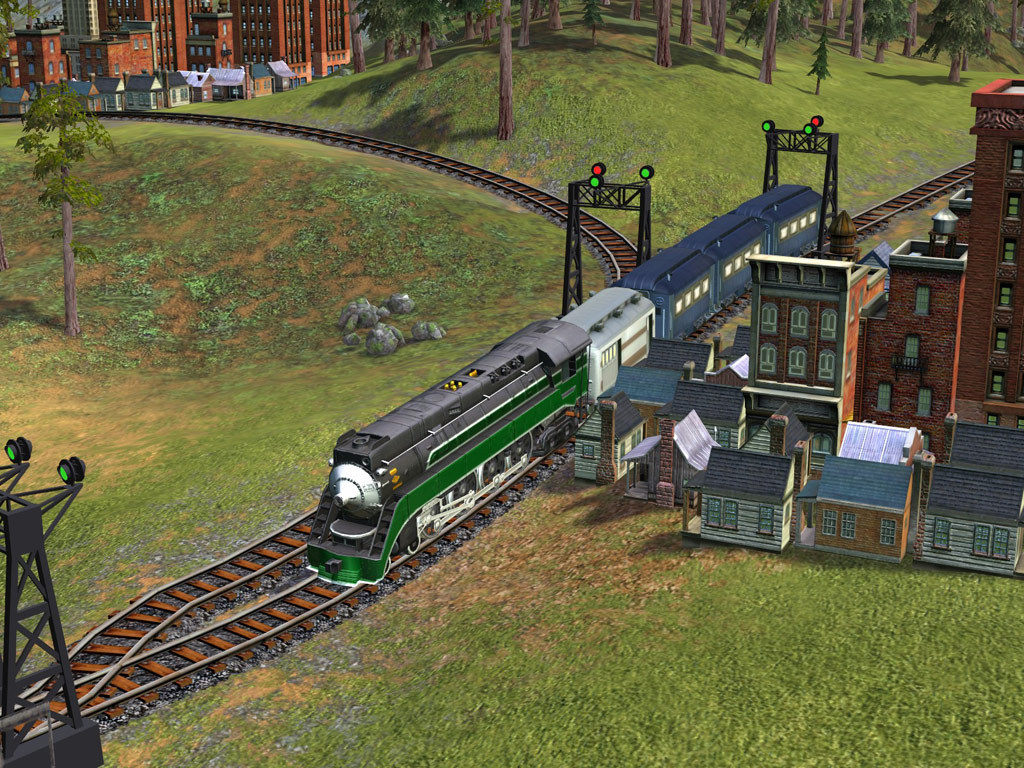
The core strategical objective of the game is to create a massive 'Revenue Generating System' (RGS). The revenue generated thereby is then used to buy out your opponents before they do the same to you. Simple and clear. Whoever makes the most money wins. The best way to judge how you are doing in the game is to occasionally bring up the F1 (Finance Report) window and compare your Revenues for the past two 'column' years versus your opponents. If you're leading by a wide margin, all is well. Note on Misleading Information on the F1 screen: The 'date' column headings near the top of the Finance window are misleading: the figures in every column 'year' are actually the sum of two running 'game-years'. At the end of every game-year, the date column headings slide over to make it look like the figures in the column underneath are derived from one game-year's earnings. Don't be confused. Every column of figures actually summarizes two game-years, not one, as the table suggests . This can be an important consideration for planning strategy in the scenarios. December 1917. It seems 1917's earnings have lagged behind the previous two years. January 1918. What's this? 1915's figures have become 1916's, 1916's have become 1917's, and 1918 has just started with the same figures 1917 ended with. The real story is, the column dated 1918 ('This Year') will be the sum of earnings from 1917 and 1918, the column now dated 1917 contains the figures for 1915 and 1916, and the one dated 1916 actually has the figures for 1913 and 1914. They're just messing with our minds here to confuse us. Don't let it get to you. There are three basic ways to make money in the game. They are: Shipping cargo Income from owned industries Stock speculation Shipping Cargo Generally the best way to make money. Far greater potential earnings than the other two methods. Be careful shipping cargo with very low value long distances. High maintenance costs could actually cause these routes to be money losers. This should be continued only if the low valued raw cargo (such as Grain, for instance) is needed to make a higher valued cargo available (such as Food). Shipping valuable cargo is the best route to domination and winning. Industry Income Generates far kess income than shipping cargo but can be a steady source, boosting earnings from shipping raw cargos. As industries grow over time the percentage the player makes from them will go up and it can eventually become significant. Early on, however, your money is better spent on creating rail routes because of the greater potential income. Note that while it can be very annoying having competitors buy the industries (through auctions) you are serving in your cities, you shouldn't worry too much. For a long time, money spent this way will yield a much lower returm than money spent on new shipping routes. Also, it is possible to cut off your opponent's income from industries in your cities, if you so choose, by not shipping raw cargo to them. Don't feel too badly about doing this because your opponents can and will do the same to you if you own industries in their cities and they feel it is favorable to them. Stock Speculation Buying your own or your opponents stock is usually the slowest way to make money but can be very profitable if done right. Stock prices 'lag' behind the true value and growth of companies so investing some money early in opponents stock (particularly after they sell) can yield substantial profits. Buying stock in the company with the best income and growth potential is usually the best idea. The company with the most potential can often be determined at the very start of the game by studying the 'Goods' overlay on the minimap to see who has the best combination of industries and raw cargo near their start position. Note, also, that it may be necessary to buy your own stock as a defensive measure and that, in any case, if you don't have any immediate plans for expansion it is better to buy stock and earn some 'interest' rather than having large anounts of cash just sitting around doing nothing. Getting A Quick Start In general, the best starting strategem is to sell all your stock at the very beginning of any scenario and create the most profitable delivery routes you can make with all the cash. Then invest all the revenue generated from these routes into building more routes, etc. Money begets money. This is the best way to achieve the high income growth necessary to become powerful. Note that your most formidable oponents, like Jim Hill, will always do this if they can. Since there is no track or station maintenance, as long as every new expansion pays for itself there is no downside to expanding except that there are more assets for the player to manage. A little point to keep in mind is that you can invest ALL your money in stations and track at the start and buy engines 'on credit', so to speak. Maintaing High Growth: Notes on Cargo Rates and Availability You must pay attention to fluctuating cargo rates and concentrate on shipping the most vakuable cargos to keep up your growth. Taking best advantage of cargo rates and availability is the single most important key to winning . Observations and tips concerning this area follow: At the beginning of most scenarios, passenger and mail rates are high and profitable. Effectively, passenger and mail cargo returns are double the value listed in the 'Goods' list because your trains carry this cargo from all stops, unlike freight routes where your trains are often pulling empty cars. Keep this in mind. Largely for this reason, the AI players always go for passengers and mail at the start if it is available. After the initial flood of passengers and mail from new towns is delivered, rates and revenues tend to drop until the towns eventually become cities and metropolises. Large quantities delivered later on, when they become available, can make up for falling cargo rates. Money can still be made on passenger and mail cargos after the rates have fallen but your opponents will usually fight you for it and cut into it significantly. It is often easier maintaining income from delivering isolated raw materials far from your opponents' access or sticking to transporting 'processed' cargos (Food, Manufactured Goods, Arms, Steel, etc) which usually stay in high demand and yield high revenues throughout the scenario. Prices for processed cargos will often fall but generally fall far less than the typically over-supplied raw goods. All cargo rates fluctuate over time. Perhaps oddly, the prevailing rates are not determined locally, at individual cities, but are determined globally; that is, by how much cargo is supplied vs. demanded over the map as a whole . Lots of passengers delivered to Paris will cause the passenger rates to drop in Madrid (and everywhere else). It is often most profitable preferring to deliver cargo that none of your opponents is delivering. Plan for the transition from passenger/mail emphasis to other cargos well in advance of the normal rate crashes of these items. Building exclusively to more cities for more mail and passengers and upgrading depots to terminals and stations to maximize passenger revenue at the time when your opponents are entering your cities and fighting you for these express cargos is a good way for your income to dry up quickly. Don't beat a dead horse. By the time pass/mail rates have fallen to 50% of the starting rate you should be well-established shipping other goods. Note that cities, industries, and raw materials suppliers grow over time and will affect the cargo rates and availability of cargos. Because of this, rates will go up as well as down. Also note that, while the player can build new industries in cities, no new raw material suppliers will appear beyond those existing initially. Pay attention to the in-game notifications about growing towns and industries and take advantage accordingly. Note that only passenger revenues are time/
ИсточникGHub Platform · автор11.09.2026, 22:05:51
The core strategical objective of the game is to create a massive 'Revenue Generating System' (RGS). The revenue generated thereby is then used to buy out your opponents before they do the same to you. Simple and clear. Whoever makes the most money wins. The best way to judge how…
Войдите, чтобы писать в группе