Eye of the Temple
Что привело вас в этот древний храм, надежно спрятанный в джунглях на горной вершине? Попасть внутрь будет весьма непросто. Вы замечаете синюю птицу, которая внимательно смотрит на вас, а затем улетает. Такое чувство, будто она хочет вам что-то сказать...
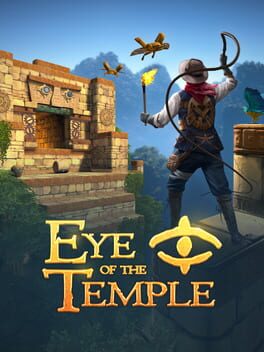
В игре Eye of the Temple вы исследуете огромный и опасный храм в виртуальной реальности, передвигаясь по нему на своих собственных ногах. Удерживайте равновесие, шагая по движущимся блокам, избегая ловушек и решая головоломки с помощью факела и кнута. Изучите загадочный храм и его прошлое, прикоснитесь к тайне Ока и станьте героем его легенды.
Внимание: для работы этой игры в виртуальной реальности требуется игровая зона размером не менее 2x2 м с отслеживанием в 360°. Преодолевайте огромные пространства
Eye of the Temple уникальным образом использует технологию позиционного трекинга, чтобы создать иллюзию исследования обширного пространства. Бродите по храму без всякой телепортации, искусственного передвижения и других отвлекающих факторов, способных испортить погружение в игру. Полная физическая симуляция кнута
Используйте кнут, чтобы достать отдаленные рычаги и защититься от летающих врагов. Постепенно вы в совершенстве освоите мастерство владения кнутом, превратив его в надежный инструмент и эффективное оружие. Ваше тело — главный контроллер
Наступайте на блоки, разбивайте горшки, переключайте рычаги и уворачивайтесь от препятствий. В этой игре вам придется полагаться на собственное тело, а не на кнопки контроллера. Игровой процесс основан на ваших движениях, поэтому его без труда освоят даже люди, не знакомые с видеоиграми. Ищите секретные зоны и сокровища
Великий храм таит в себе множество секретов, найти которые под силу лишь самым наблюдательным игрокам. Внимательно смотрите по сторонам во время первого прохождения или вновь попытайте удачу после прохождения игры. Дополнительный режим скоростного прохождения
Самые отчаянные искатели приключений могут разблокировать режим скоростного прохождения, позволяющий развить невероятную скорость: каждый точно рассчитанный шаг немного ускоряет движущиеся блоки. Испытайте свою реакцию и ловкость в этом суровом режиме.
Внимание! Для работы этой игры в виртуальной реальности требуется игровая зона размером не менее 2x2 м с отслеживанием в 360°.
Во время игры вы можете ощутить потерю равновесия, когда блоки, на которых вы стоите, начинают или прекращают движение. Как правило, это ощущение быстро проходит. В игре также предусмотрены различные настройки для повышения комфорта игры в виртуальной реальности.
Существует небольшой риск падения из-за потери равновесия. Играйте на свой страх и риск.
Удачи в приключениях!
Системные требования
Минимальные
- Minimum:
- Requires a 64-bit processor and operating system
- OS *: Windows 7, 8.1, 10
- Processor: Intel Core i5-4590 / AMD FX 8350
- Memory: 4 GB RAM
- Graphics: NVIDIA GeForce 970
- DirectX: Version 11
- Storage: 850 MB available space
- VR Support: SteamVR. Room Scale 2m by 2m area required
Рекомендуемые
- Recommended:
- Requires a 64-bit processor and operating system
Отзывы
Steam · Very Positive
Все отзывы в Steam395 положительных из 425 отзывов
Игрок 1798Рекомендует10 ч в игре
Eye of the Temple is a VR adventure built around an idea that sounds simple but becomes remarkably convincing once you are inside the headset: instead of controlling an explorer from a distance, you physically become the explorer. Developed and published by Rune Skovbo Johansen, the game takes players into a sprawling ancient temple filled with mechanical platforms, dangerous drops, puzzles, hidden treasures, and mysterious structures. Its greatest achievement is making this enormous virtual environment feel navigable almost entirely through your own physical movement. Rather than depending on traditional analog-stick locomotion, the game cleverly works within a room-scale VR space. Moving blocks, rotating platforms, elevators, and carefully positioned pathways transport you around the temple while repeatedly bringing you back into your available physical area. You step from platform to platform with your actual feet, turn your body to face new directions, duck beneath obstacles, and maintain your balance as the environment moves around you. It creates an impressive illusion that you are traveling considerable distances despite never leaving your designated play space. The temple itself is more than scenery surrounding the locomotion system. Exploration gradually reveals interconnected chambers, mechanisms, pathways, and secrets. There is a satisfying sense of discovery when a newly activated device opens another route or when careful observation reveals an optional treasure. The story remains relatively restrained, allowing the environment and the mystery surrounding the temple to provide most of the motivation. This approach suits the game because stopping frequently for lengthy dialogue would undermine the physical rhythm of exploration. Interaction is similarly designed around motion. One of the most entertaining tools is a physically simulated whip that can be used to activate distant switches and deal with certain threats. It takes practice to use accurately, which initially makes it feel slightly unpredictable, but becoming more proficient with it adds another layer of physical involvement. A torch and various environmental mechanisms reinforce the archaeological adventure atmosphere, making ordinary interactions feel more engaging simply because you perform them with your own hands. Puzzles are generally woven naturally into the architecture. Instead of constantly presenting isolated logic challenges, the game asks you to study the surrounding machinery, understand how different platforms operate, locate switches, and determine how to safely reach the next area. Platforming and puzzle solving therefore support each other. There is often a satisfying moment when understanding a mechanism simultaneously reveals both the solution and the route forward. Optional treasures and concealed areas also reward players who investigate rather than rushing toward the obvious objective. The sensation of scale is another major strength. Deep drops, towering structures, moving machinery, and distant sections of the temple become considerably more intimidating when experienced stereoscopically in VR. Even relatively simple environmental geometry can feel dramatic when you must physically step toward an edge or onto a moving block. The visual presentation wisely emphasizes readable architecture and depth rather than excessive graphical detail, while the sound design helps establish the lonely atmosphere of exploring an enormous forgotten structure. There are some practical limitations that cannot be separated from the experience. Eye of the Temple requires a sufficiently large room-scale VR area, with approximately 2 by 2 meters of clear space being fundamental to its movement system. Players should remove furniture and other obstacles before playing because the game frequently encourages real physical steps and turns. The moving-platform illusion can also challenge your sense of balance. Although comfort considerations are included, people who are particularly sensitive to VR motion may need time to adjust. Replay value comes from discovering treasures and secrets that may have been overlooked during the initial journey, while additional speedrun challenges encourage experienced players to approach familiar areas with greater efficiency. These challenges work especially well because mastering movement becomes a skill of its own. What begins as cautious stepping between blocks can eventually turn into confident navigation as you learn the timing and behavior of the temple's mechanisms. Steam Deck compatibility is effectively not applicable as a normal handheld experience. Eye of the Temple is a VR-only game that requires compatible PC VR hardware, tracked controllers, and a proper room-scale play area. A Steam Deck by itself cannot provide the required VR setup or physical tracking environment, so players should not purchase it expecting conventional Deck gameplay. Eye of the Temple stands out because virtually every major design decision supports physical immersion. Its puzzles, movement, environmental design, tools, and exploration all take advantage of VR rather than merely placing a conventional first-person adventure inside a headset. The room-space requirement inevitably makes it less accessible, and its moving environments can be demanding for VR newcomers, but with the proper setup it delivers an imaginative adventure that genuinely makes you feel as though you are navigating a dangerous ancient temple with your own body. Rating: 9/10