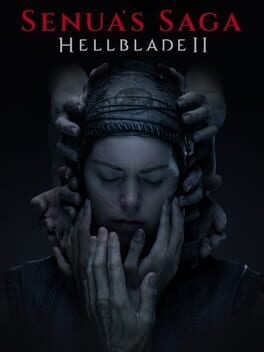
Hellblade II: Senua's Saga
Продолжение отмеченной наградами игры Hellblade: Senua’s Sacrifice, Сенуа возвращается в жестокое путешествие выживания через мифы и мучения Исландии викингов. Намереваясь спасти тех, кто стал жертвой ужасов тирании, Сенуа предстоит битва за преодоление тьмы внутри и снаружи. Новое обновление для 2025 года: теперь оно дополнено дополнительными функциями, открывающими новые способы испытать отмеченный наградами и получивший признание критиков путь выживания. • Для ПК с ОС Windows добавлена предустановка графики «Очень высокая». • Dark Rot возвращается в жестоком режиме боевого испытания. • Снимайте кинематографические моменты с помощью дополнительных функций фоторежима. • Узнайте, как Ninja Theory создала отмеченную наградами игру, благодаря новым комментариям разработчиков.
ИСТОРИЯ SENUA ПРОДОЛЖАЕТСЯ Сенуа возвращается в жестокое путешествие выживания через мифы и мучения викингов в Исландии. ИСКУССТВЕННЫЙ ОПЫТ КИНЕМАТИЧЕСКОГО ПОГРУЖЕНИЯ Погрузитесь глубоко в мир и историю Сенуа с прекрасно реализованными визуальными эффектами и захватывающим звуком. УНИКАЛЬНАЯ ПЕРСПЕКТИВА SENUA Испытайте мир глазами и ушами Сенуа, как кельтского воина, страдающего психозом.
ПУТЕШЕСТВИЕ В ВИКИНГОВУЮ ИСЛАНДИЮ Эпическое путешествие по Исландии X века, воссозданное на основе реальных мест с потрясающими деталями. КАЖДЫЙ БОЙ РАССКАЗЫВАЕТ ИСТОРИЮ Жестокие и жестокие бои, в которых Сенуа борется за выживание. ОПЫТ, отмеченный наградами Признанный критиками победитель премий The Game Awards, BAFTA Game Awards и многих других.
Системные требования
Минимальные
- Minimum:
- Requires a 64-bit processor and operating system
- OS: Windows 10/11 64 Bit
- Processor: Intel i5-8400 | AMD Ryzen 5 2600
- Memory: 16 GB RAM
- Graphics: Nvidia GTX 1070 | AMD RX 5700 | Intel Arc A580
- Storage: 70 GB available space
- Additional Notes: SSD Required
Рекомендуемые
- Recommended:
- Requires a 64-bit processor and operating system
- OS: Windows 10/11 64 Bit
- Processor: Intel i7-10700K | AMD Ryzen 5 5600X
- Memory: 16 GB RAM
- Graphics: Nvidia RTX 3080 | AMD RX 6800 XT | Intel Arc A770
- Storage: 70 GB available space
- Additional Notes: SSD Required
Отзывы
Steam · Very Positive
Все отзывы в Steam8 700 положительных из 10 039 отзывов
Игрок 7850Не рекомендует45 ч в игре
Мдамс. В отличие от первой части, она весьма... плоха. Начиная с того что вся боёвка упирается, как и многие действия в повторении одного и то же, не получилось - сделай так чтобы получилось. Если фактически в первой части бой красочный и интересный, проще сказать стандартный, то здесь уже что-то из разряда Q+E. Только в блоках и парировании. Конечно местами вылетающие руны смотрятся интересно... Далее с технической стороны, если в 1 части всё плавно на ультрах, то местами здесь дичайшие фризы на минималке. Сюжет и тот подкосил, как будто бы расслабились и решили - сделаем по быстрому. Загадок на порядок меньше, но от того не проще, они стали просто однотипные, настолько - что можно было бы 10 загадок превратить в 1, ведь повторяется одно и то же.
Игрок 9685Рекомендует32 ч в игре
**Senua’s Saga: Hellblade II — An unforgettable journey** Senua’s Saga: Hellblade II is one of those games that I find difficult to judge by the same standards as almost everything else I play. It is not trying to be an open-world adventure, an RPG full of systems, or a combat-heavy action game. It is a focused, cinematic, narrative-driven experience, and for me it succeeds spectacularly at what it wants to be. I absolutely loved it. The first thing that stands out is the audiovisual presentation. Hellblade II is one of the most impressive games I have ever seen. There are moments where the transition between gameplay and cinematics is almost impossible to notice. Character models, facial animation, lighting, weather, landscapes and materials are all exceptional, but what matters most is that the technology is always serving the atmosphere. Iceland feels hostile, beautiful, ancient and almost supernatural. Mud, rain, wind, darkness, fire, cliffs and ruined settlements create a world where reality, mythology and Senua’s perception constantly overlap. That ambiguity is one of the things I enjoyed most. I do not interpret everything we see literally. The giants, for example, can be understood as manifestations of forces, people, fears and traumas that Senua and the people around her are trying to comprehend through myth. A storm can become a giant. Destruction can become a giant. A cruel person can become a monster in a story. Trauma itself can become something enormous and terrifying. The game leaves enough room for interpretation, and I appreciate enormously that it does not explain every symbol or image to the player. The sound design is just as important as the visuals. This is a game that deserves to be played with good headphones. The voices surrounding Senua are not simple background dialogue: they are part of the experience. They warn her, contradict her, encourage her, frighten her and sometimes make you doubt what you are seeing. Combined with the music, breathing, environmental sound and incredible use of space, the result is one of the most immersive audio experiences I have had in a game. Senua herself remains an exceptional protagonist. Her performance is extraordinary because the game does not need endless exposition to show what she is feeling. Fear, exhaustion, anger and determination are communicated through her face, her breathing and the way she moves. The presentation makes her feel incredibly human. The game is also unapologetically linear, and I have no problem with that. In fact, I think that focus is one of its strengths. Every scene exists for a reason, every environment is carefully framed, and the developers control the rhythm of the journey almost like a film director. I know that this will immediately turn some players away, and that is completely understandable. Hellblade II is not a game for everyone. What I do not understand is criticizing it simply because it is not twenty, thirty or fifty hours long, or because Iceland is not covered with side quests, crafting materials and map icons. The game never pretended to be that. I would rather have a concentrated eight-hour experience where almost every scene has purpose than a game stretched to thirty hours with repetitive content just to increase its length. Not every game needs to become a lifestyle. That said, loving Hellblade II does not mean I think it is perfect. The combat is probably the clearest example. Visually, it is phenomenal. The animation, camera work and choreography make every encounter feel brutal. Sword clashes have weight, Senua fights like someone struggling to survive rather than a superhero, and some transitions between enemies look incredible. Mechanically, however, it is very simple. There is not much depth, and by the end of the game you have seen almost everything the combat system has to offer. I enjoyed it because of its presentation and intensity, but I would have liked Ninja Theory to develop it a little further without turning the game into a conventional action title. The same is true of the puzzles. I like the visual and perspective-based ideas, and they fit the world extremely well, but I would have liked more of them and perhaps a little more complexity. I also think the game could have allowed slightly more exploration. I absolutely would not want Hellblade II to become open world, but Iceland is so beautifully created that I often wanted to move a little farther away from the main path. A few larger areas, optional environmental details or small discoveries could have added a lot without damaging the pacing. In other words, I did not want a different Hellblade. I simply wanted more Hellblade. Narratively, I still think the first game is stronger. Senua’s Sacrifice was an incredibly personal story about grief, trauma and Senua’s relationship with Dillion, and that emotional focus is very difficult to surpass. Hellblade II expands the scale, introduces more characters and makes Senua part of a larger world. I enjoyed that evolution, but the first game still has the more powerful story for me. As an audiovisual experience, however, Hellblade II is on another level. There are sequences here that I genuinely consider among the most impressive things I have experienced in a video game. It is one of those rare games where I occasionally stopped thinking about mechanics, objectives or progression and simply became absorbed in what was happening on screen. That is ultimately why its length never bothered me. I finished the game wishing there had been more puzzles, more exploration and a little more depth to the combat. But I also finished it completely fascinated by what I had just experienced. There are bigger games. There are longer games. There are games with deeper systems. But there are very few games that feel like Hellblade II. I also respect Ninja Theory for making something this uncompromising. Games with this level of production value are usually designed to appeal to the widest possible audience. Hellblade II does almost the opposite. It commits completely to its identity even knowing that some players will dislike the slow pace, limited exploration, simple combat or cinematic structure. I would much rather see more ambitious, distinctive games like this than another perfectly competent product designed by committee. If your priority is deep combat systems, builds, loot, replayability or dozens of hours of content, Hellblade II probably will not be for you. But if you enjoy atmospheric games, psychological storytelling, strong characters, incredible audiovisual presentation and games that are not afraid to slow down and let their world consume you, Hellblade II is something special. For me, it was not simply a technically impressive game. It was a dark, brutal, beautiful and unforgettable journey through Senua’s perception of a world where mythology, trauma, nature and reality are almost impossible to separate. One of my favourite gaming experiences in recent years. Absolutely recommended.
Игрок 7755Не рекомендует7 ч в игре
They took out the interesting puzzles and the (somewhat) reactive combat and made it more walking sim, than anything else. Should have just made a movie, instead.
Игрок 9012Рекомендует11 ч в игре
Hellblade II: Senua Saga - Un espectáculo visual y auditivo. Hellbalde 2 al igual que su anterior entrega nos pone en la piel de Senua para continuar el viaje por la Islandia de la era vikinga. El juego es un puro walking simulator donde solo podremos interactuar con lo básico de la historia. Los gráficos han sido evolucionados a la máxima expresión con una experiencia totalmente satisfactoria donde el Unreal Engine 5 se luce de manera soberbia donde tendremos que darle una buena maquina para poder moverlo y disfrutar. El juego viene con RT sin posibilidad de desactivarlo, por lo que solo podremos ponerlo en alto o épico donde la diferencia entre ambos es nula y la bajada de rendimiento si es realmente abusiva. 100% optimizado en todos los aspectos. https://steamcommunity.com/sharedfiles/filedetails/?id=3768245559 https://steamcommunity.com/sharedfiles/filedetails/?id=3776883230 https://steamcommunity.com/sharedfiles/filedetails/?id=3785729788 En el apartado de audio como en su anterior entrega se recomiendo encarecidamente jugar con los cascos ya que dispone de sonido binaural y realmente es una pasada con unos buenos cascos, en mi caso unos Corsair VIRTUOSO. El combate ha sido mejorado y pulido con respecto a su anterior entrega, pero no deja atrás sus patrones básicos, ataque normal, ataque pesado, esquiva, bloqueo y la utilización del tiempo para ralentizar. Esto se consigue golpeando al enemigo y bloqueando. PD: Para poder quitar la franjas negras y el filtro cinematográfico busquen en YouTube donde encontraran que hacer para ello en la raiz donde se instala el juego.
Игрок 7543Рекомендует15 ч в игре
Artisticamente esse jogo é lindo, arte, musica, modelo, gráficos, personalidade, impecável. Os personagens são complexos e profundos, os simbolismos e metáforas são muito bem usados, toda a construção é absurda. A questão da senua e as vozes e o som 3d deixa tudo muito imersivo e vc se sente um pouco na pele dela. Ponto mt forte é a fluidez do jogo, sem telas de carregamento evidentes, sem cortes secos entre cutscene e game, amassaram dms nisso, bem vibe gow 2018. Mecanicamente, o jogo tem falhas, um pouco mal otimizado, muita limitação e paredes invisiveis, mas muitas mesmo, sem exagero, não consigo contar as vezes que minha imersão foi quebrada por um limite, uma pedra pequena, o combate é gostoso, legal, mas bem simples e scriptado dms, o do primeiro era melhor nesse sentido, o letterbox que vc é obrigado a jogar com, e pra tirar não existe opção nativa, tem que mexer em arquivo do jogo, eu prefiro ter minha tela inteira em jogo, mas é uma questão pessoal. Ainda assim JOGÃO.
Игрок 0795Рекомендует31 ч в игре
Senua’s Saga: Hellblade II is the only game I have ever completed more than once. That matters, because my second playthrough completely changed how I understood the game. One of the most common criticisms of Hellblade II is that it is a “walking simulator” with shallow combat and too little player agency. I understand where that impression comes from, but after playing it again I think it is an extremely unfair description of what Ninja Theory actually built. Hellblade II deliberately limits the number of things the player has to think about. There are no skill trees, inventories full of equipment, complicated combos, loot systems or dozens of abilities to memorize. Combat is based on a very small vocabulary: quick and strong attacks, parries, dodges, staggering an opponent, Focus, and the context in which you use them. What I only gradually realized is how much is happening underneath that simplicity. Different attack sequences can produce very different outcomes. A quick attack after a parry does not necessarily resolve like a strong attack. Attacking a staggered enemy can lead somewhere else. Dodging and counterattacking can produce different transitions. Enemy type matters. Positioning matters. The state of the previous interaction matters. And then there are the moments where I genuinely cannot tell where gameplay ends and scripting begins. During one large battle I died and replayed the same section. On one attempt, after killing an enemy, Senua took his shield and immediately used it to defend herself against the next attacker. When I replayed it, the transition into the next enemy happened completely differently. Until then I had assumed moments like that were simply scripted cinematic sequences. They weren’t. Or at least, not entirely. That realization made me pay much closer attention. The game appears to use an enormous amount of contextual choreography to make your actions flow into scenes that look deliberately directed. Even finishing enemies can happen in many different ways depending on how you reached that situation. That is the thing I think many reviews miss when they reduce Hellblade II to its controls. Its controls are simple. What it does with them is not. The limitation is also part of why the game is so extraordinarily immersive. Ninja Theory controls the possibilities tightly enough that almost nothing looks like ordinary videogame logic. Enemies rarely look as though they are standing around waiting for their combat turn. Senua does not snap awkwardly between unrelated animations. Dramatic events flow into combat, combat flows back into narrative, and I frequently find myself unsure whether something happened because of what I did or because the game had planned it all along. And that ambiguity is wonderful. Most games become less believable the more you understand their systems. Eventually you see the AI rules, encounter boundaries, animation loops and mechanics underneath the presentation. My second playthrough of Hellblade II did almost the opposite. I discovered that some things I had assumed were scripted were actually responding to me. It is also one of very few games I genuinely enjoy watching someone else play. It can look like a film, but it is a film whose performance is quietly being influenced by the person holding the controller. That does come with limitations. Combat is not mechanically deep in the conventional sense. Exploration is restricted. The game very deliberately controls where you can go and what kinds of interactions are available. But I do not think those are simply shortcomings. They are also what allow Ninja Theory to achieve a level of narrative continuity, physical believability and emotional immersion that I have rarely experienced in a game. Hellblade II almost never makes me stop thinking about what Senua is experiencing so that I can start thinking about videogame systems. That is why I am slightly apprehensive about the direction of the next Senua game. Everything shown so far suggests considerably more player freedom: broader combat encounters, multiple enemies, stealth, more traversal and greater choice in how situations are approached. Those things sound good in isolation. I am not against deeper gameplay, and stealth in particular could fit Senua extremely well. But freedom has a cost. If the player is supposed to choose how to approach every encounter, the game has to tell the player that an encounter exists. I need to see the enemies, understand the environment and evaluate my options. And once I know all of that, the story loses the ability to surprise me in the same way. You cannot convincingly walk me into a trap if the game first needs to give me enough information to decide whether I want to approach the trap from the left, the right, or stealthily. Likewise, genuine multi-enemy combat introduces exactly the kind of visible game logic that Hellblade II is so extraordinarily good at hiding. One enemy standing unnaturally still while another engages Senua might be completely normal in an action game. In Hellblade II, after hours of almost seamless choreography, I would notice it immediately. So I hope Ninja Theory finds the balance. I do not need Senua to have twenty more moves. Hellblade II already shows how much variety can come from a handful of actions when the game understands context. Give me more possibilities if they can remain believable. Give me exploration where it serves the story. Give me stealth where Senua herself would realistically use stealth. But when the narrative needs control, I hope Ninja Theory is still willing to take that control. Hellblade II is not special because it gives the player endless freedom. It is special because its restrictions allow the game to make me forget, for long stretches of time, that I am playing a game at all. Calling that a “walking simulator” misses almost everything interesting about what Ninja Theory achieved.
Игрок 4546Рекомендует12 ч в игре
Ähnlich wie schon beim ersten Teil hat mich auch Hellblade II wieder besonders durch seine Atmosphäre und die Stimmen in Senuas Kopf gepackt. Die Soundkulisse ist dabei einfach bombe. Die Stimmen, die Geräusche und die Musik passen perfekt zusammen und sorgen dafür, dass man komplett in das Spiel eintaucht. Dazu kommt diese unglaubliche Grafik. Hellblade II sieht einfach atemberaubend aus. Zusammen mit der düsteren und bedrückenden Atmosphäre ist das einer der größten Stärken des Spiels. Eigentlich gibt es für mich kaum etwas am Spiel, das mir nicht gefallen hat. Die Spiellänge ist zwar nicht besonders groß, aber genau das sehe ich hier überhaupt nicht als Kritikpunkt. Das Spiel wird nicht unnötig in die Länge gezogen, sondern erzählt seine Geschichte in einer für mich perfekten Länge. Eine gelungene Fortsetzung, alles greift perfekt ineinander.
Игрок 2299Рекомендует6 ч в игре
1st one was better. this game ran pretty horribly without dlss, and even then it struggled. i enjoy the franchise and what senua goes through. but wish this wasnt more of the same of Hellblade 1
Обсуждения и советы
Открыть форумОтключение черных полос, улучшение четкости [UPDATED 23.07.2026]
GHub Platform · Гайд
Самое быстрое руководство по 100% достижениям: Senua's Saga: Hellblade II
GHub Platform · Гайд
Отключение черных полос, улучшение четкости [UPDATED 23.07.2026]
Steam Guide
Fastest Guide to 100% Achievements: Senua's Saga: Hellblade II
Steam Guide