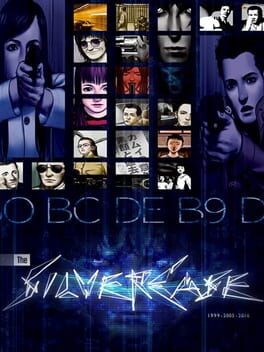
The Silver Case
1999 – Tokyo’s 24 Wards. The city has been plagued by a string of serial murders. The detectives of the 24 Wards Heinous Crimes Unit have their sights set on one particular suspect: Kamui Uehara, legendary serial killer and perpetrator of a number of assassinations of government officials 20 years prior in the now-famous "Silver Case". However, nobody knows who - or what - Kamui really is.
Is this really the second coming of Kamui? Who is this infamous serial killer, and what is his endgame?
Take control of the protagonist - a member of the Special Forces Unit known as “Republic” - from a first-person perspective and dig deep into the underground of the 24 Wards and the police force itself to unravel the various interconnected mysteries encountered throughout the game. Inspired by classic adventure and visual novel-style games as well as neo-noir and hardboiled detective films, The Silver Case provides a unique and revolutionary gameplay experience as it leads you through deep and engaging storylines filled with puzzles and riddles. Uncover the truth piece by piece as you struggle to survive in this dark and dangerous world where the stakes are even higher than they seem!
Kamui Uehara
A dyed-in-the-wool psychopath who gained the title of “the King of Crime” after stabbing a government official to death. Kamui’s motive is completely shrouded in mystery, and it is not known whether he’s acting alone or following orders from some higher power. His victims are major witnesses of suspicious industrial disasters and persons of interest in legal cases which cannot be tried under the current system.
Sumio Kodai
A straight-laced, mid-level investigator in the 24 Wards Heinous Crimes Unit. Relatively quiet and subdued, he provides a perfect contrast to his partner Kusabi, the more rough-around-the-edges of the pair.
Tetsugoro Kusabi
Sumio’s partner, and a grizzled veteran investigator. Back in his regional agent days, he headed the original Silver Case 20 years prior.
Chizuru Hachisuka
A beautiful and level-headed investigator who relies on scientific evidence and raw data to solve crimes.
Kiyoshi Morikawa
Calm and collected, Morikawa is a talented investigator who has worked with Kusabi since their days as regional agents. One of the founding members of the Heinous Crimes Unit.
Morichika Nakategawa
Originally a member of the Public Security Department, Nakategawa has connections in all of the surrounding jurisdictions and is plays a vital role in interdepartmental communications. Rather than going out into the field to investigate crime scenes directly, Nakategawa’s main focus lies in directing investigations from HQ.
Системные требования
Минимальные
- Minimum:
- OS *: Windows XP SP2+ or newer
- Processor: SSE2 instruction set support or greater
- Memory: 4 GB RAM
- Graphics: DX9 (shader model 3.0) or greater
- DirectX: Version 9.0
- Storage: 7 GB available space
Рекомендуемые
Данные пока не загружены
Отзывы
Steam · Very Positive
Все отзывы в Steam1 074 положительных из 1 203 отзывов
Игрок 9100Рекомендует33 ч в игре
嗯...想写的内容有点多。真要谈起The Silver Case,我反而不知从何说起,尽量做到不剧透(?)。这部作品在我看来很矛盾:叙事理念超前、艺术表达独特、社会议题厚重,但门槛极高、操作枯燥、叙事碎片化、体验割裂,它显然不适合所有玩家,尤其不适合单纯追求游戏娱乐性的玩家。甚至当你看到游戏Steam启动界面的成就栏上方,还专门放着一个“手册”时,大概就应该意识到:这不是一部打开之后一路轻松通关的作品。它需要一点耐心,也需要一点主动理解的意愿。所以如果最近正好有比较充裕的时间,也有一个相对平和的心态,我觉得倒是可以浅尝一二。。 我为什么被这款作品吸引 淘到这部作品,是从考古黄昏症候群延伸而来。我判断游戏的第一优先级向来是直觉——它有没有让我觉得"这东西不一样"?甚至不需知道好不好玩,单凭UI、画面、音乐、气质就够了。The Silver Case恰好如此。碎片文字、极简头像、冰冷UI、压抑合成器乐——它不精致,但有自己独一份的样子。这,对我很重要。 UI叙事:把主题刻进UI The Silver Case有哪方面值得一说?我会先从菜单UI说起。UI仿照音频调音台,双线剧情恰好对应调音台的双声道:CH1对应Transmitter(发射机/刑警线),CH2对应Placebo(安慰剂/记者线)。双声道的设计寓意早已暗藏剧情核心:两条故事线相互独立、彼此割裂,却需要玩家"混音拼接",才能拼凑出完整的真相。Transmitter是在场者的视角,刑警主角隶属于凶恶犯罪课,亲历案发现场、直面暴力与罪恶,接触的是事件最直白、最真实的表象。Placebo是不在场者的视角,记者Tokio从不深度亲历罪案,他对这座城市、所有案件和人物的认知,全部来自新闻、邮件、传闻、走访等二手信息。一个直面原生的现实,一个接收被加工后的现实;一个负责输出事件本身,一个负责接收舆论碎片。二者互补,才是1999年24区的完整样貌。 不止双线声道,调音台上的旋钮英文词汇,全是贯穿全篇的核心主题:depth(深度)、silence(沉默)、insanity(疯狂)、accident(事故)、survive(幸存)、piece(碎片)、wheel(轮回)、noise(噪音)、impulse(冲动)、lunatic(疯狂)……它根本没有刻意隐藏自己的内核,而是把都市疯狂、舆论噪音、记忆碎片、命运轮回的所有主题,直接做成交互界面。菜单从不是单纯的工具,而是剧情的一部分。 双线叙事:两种视角,两种被局限的真相 本作的双线设计,不只是简单的视角拆分,我认为是对认知世界方式的深度思辨。两条线,代表两种完全不同的信息获取逻辑,也对应两种永远无法触及完整真相的局限,所以游玩过程中强烈建议双线并行推进,先刑警线后记者线。Transmitter是在场视角,主角身处体制之内,是案件的亲历者、暴力的见证者,能看见尸体、凶案、混乱的现场,能触碰所有事件的结果,却始终触碰不到罪恶的根源。体制裹挟着他、命运推着他走,他只能目睹表象,永远无法击穿层层黑幕。Placebo是不在场视角,Tokio坐拥信息,邮件、传闻、网络舆论、路人说辞应有尽有,但所有信息都是被加工、被筛选、被篡改过的二手碎片。他身处城市舆论与网络信息流的中心,被虚假信息包裹在门内,无数真相线索——邮件、门铃、传闻——不断在外叩门,但他永远无法彻底推开迷雾、触达真实。一个在门外,触碰现实却远离真相;一个在门内,被信息淹没却不敢开门。两条线互相钳制,共同拼出完整的困局。 画风错位:细腻的叙事诡计,最真实的认知 我游玩的过程中会疑惑,为什么同一个角色,在两条故事线里的头像画风完全不一样?我觉得这是本作最容易被忽略、却最精妙的隐喻设计。刑警线的人物头像规整、统一、标准化,是警局档案里的官方形象,是体制定义的公共身份,是外界赋予一个人的"标准模板",看似客观公正,实则是被定义的虚假标准答案。记者线的人物头像陌生,没有统一的标准,因为所有的样貌都不是真实长相,而是Tokio靠着碎片化信息在脑海中自行脑补、拼接出的主观印象。同一个人,两种截然不同的面孔,我想我们认知的从来不是真实的人,只是别人、舆论、体制想让我们看到的人。游戏中酒吧"乌龟"的桥段,将这份认知展现得淋漓尽致,同一个对象,在不同人的视角里拥有完全不同的形态。而这一切,都是为了呼应全篇的核心符号"神威":不同立场、不同媒介渠道所认知的"神威"各不相同,符号本身已经脱离了任何一个具体的人,变成了可以被不同人群投射、消费、模仿的存在。 邮件:藏在舆论里的微型社会闭环 我觉得游戏中的邮件系统设计的很好,看似是零散的支线内容,实则是构筑24区舆论生态、暗藏深层真相的关键线索。每日邮件代表表层大众舆论,记录着市民对连环案件的猎奇讨论与片面解读,展现事件发生之后舆论如何加工事件、真相如何被流言稀释扭曲。植物蝙蝠邮件则以植物、土壤、腐烂为暗语,隐晦埋藏着被权力掩盖的陈年旧案,是解锁深层真相的核心暗线。匿名偷窥邮件则展现网络对现实的窥视与渗透,线上舆论操控线下事件,线下罪孽反哺线上神话,信息相互缠绕、彼此闭环。你以为自己在观察城市,其实城市也在观察你。 刻意粗糙:不是缺陷,是专属的艺术表达 重复冗余的操作、无法跳过的简陋CG、晦涩难懂的对话、极简的画面UI、后期大量的场景复用,这些都是The Silver Case最被玩家诟病的短板,也是无数人劝退的原因。我完全理解这份差评,单论游玩体验,它确实拖沓、枯燥、甚至有些故弄玄虚。但在全程游玩过后,我个人越发觉得:这份粗糙,大半都是刻意为之的艺术表达。本作采用独特的「Film Window」叙事体系,不追求完整、流畅、精致的画面呈现,而是将文字、碎图、片段影像、空白窗口自由拼接,像一堆被人为剪碎、随意堆砌的录像带与档案资料。黑白纪实素材、画面留白、碎片化剧情、冰冷合成器乐、重复空旷的场景,共同构筑出独属于90年代末的都市质感:荒芜、冷漠、叛逆、迷茫、混沌。它呈现给玩家的,从来不是一场精心编排的故事,而是一份未经整理、残破真实、满是漏洞的1999年城市档案。所有的不完美,都在贴合主题:真相本就是破碎的,现实本就是割裂的,黑暗本就是藏在重复与荒芜之中的。 后期重复:凝视黑暗,也被黑暗凝视 游戏后期,我早已不再纠结场景重复、节奏拖沓的问题。随着剧情逐步深入,这份枯燥的重复反而带来了极强的代入感与压迫感。没有华丽的大场面,没有密集的剧情反转,没有直白的真相剧透。很多时候,你只是独自穿梭在空旷、重复、冰冷的场景里,缓慢推进剧情,拆解细碎线索。再搭配转场时粗重、压抑、沉闷的喘息声,那种氛围感扑面而来:仿佛有无形的创伤、未知的黑暗一直盘踞在身后,你看不见它,却能清晰感知它的存在。到最后,游玩的体验早已不是"观看故事",而是独自凝视深渊,同时被整片黑暗静静凝视。或许有过度解读的成分,但这份留白与压抑,我觉得是一份独特的沉浸魅力。 音乐本身就是另一种叙事 The Silver Case的配乐同样值得单独拎出来说。它几乎不会直白渲染悲伤或恐怖,许多段落是空荡、疏离、带着怀旧感的合成器音色,压抑、诡谲,却不刻意煽情。文本大段思辨时,音乐压低存在感,为玩家留出思考空间;情绪爆发时刻,反而用冰冷的电子音色拉开距离,避免落入俗套的情感渲染。配乐使用了角色主题动机写作手法。刑警线偏向冷硬、紧凑的鼓机节奏,带着刑侦调查的紧绷感;记者线的曲目则更忧郁、松散,充满媒介噪音,大量模糊的合成器铺底,对应媒体、记忆与主观感受的叙事基调。两条线不仅剧本分开,连音乐音色本身就在区分客观现实与主观叙事。许多旋律片段会反复变形重现,人物情绪发生变化时,同一主题的音色、混音也随之改变。音乐不只是背景,它是与UI、视觉并列的叙事层,在听觉上不断提醒你:你在听的,究竟是事件本身,还是事件被讲述的方式。 碎片化:独有的游玩方式 这款游戏玩法枯燥、操作重复、剧情晦涩,到底在“玩”什么?对我而言,主动寻找线索、拆解隐喻、比对双线差异、考据背景细节、拼接零散剧情,这个摸索、求证、顿悟的过程,就是最核心的游玩乐趣。就像鼓捣一件复杂的电子产品,一点点拆解、试探、拼接,在碎片化信息里找到关联,在晦涩细节里读懂真相,那一刻的通透感,就是它给予玩家的专属反馈。这也决定了它的极致挑人:不同游戏风格的玩家可能会觉得它故弄玄虚、无聊拖沓;愿意主动沉浸、主动探索的玩家,才能读懂这座都市迷宫。 值得体验 我不否认The Silver Case客观存在的硬伤。所以我不会无脑推荐它。如果追求传统游戏的"娱乐性",它绝对会让你失望。但如果你偏爱实验性叙事、冷门艺术表达、都市暗黑寓言,喜欢拆解隐喻、考据剧情、深度思辨社会与人性,那它绝对是不容错过的作品。不必强求一遍读懂所有伏笔,也不用纠结一时的困惑。只需走进1999年的24区,沉浸式感受这座城市的谎言与黑暗,慢慢拼凑散落的真相碎片。通关双线、通过互联网查阅细节资料、完成所有拼接的那一刻,你会读懂作品的内核——真相从不会主动现身,自由从不会与生俱来。过去可以定义你的来路,但永远不能定义你的归途。这,就是属于The Silver Case的核心母题——Kill the Past。
Игрок 9309Рекомендует26 ч в игре
The Silver Case was initially released for the Playstation 1, in Japanese only, though, by now, is out in languages you actually speak, on platforms you actually own, including, but not limited to, Steam, the Switch and the PS4. Silver Case's gameplay is described pretty easily: It's a visual novel. There is some minor navigation of 3D environments and some very rudimentary puzzle solving that may, if you're generous, technically make it an adventure game but you'll mainly engage with Silver Case through reading. It does do some interesting things with its presentation, though, that do foreshadow Suda's knack for stylish direction. So, what is it actually about, then? Well, on face value, it's a hard boiled detective story, experienced from two different perspectives. A police officer the player gets to name (The closest thing to a canon name he has is the moniker "Big ♥♥♥♥" which, for my and your amusement, I'll use to refer to him) and freelance journalist Tokio Morishima. Both those men investigate a recently escaped serial killer named Kamui Uehara, arrested around 2 decades before the events of the game, for the murders of various political and industrial figures. For people more familiar with Suda51s later work, this might sound pretty mundane. And interestingly enough, it keeps feeling that way for the games early half. The first case of the game seems to conclude the Kamui case in a way that, while leaving some very obvious loose ends, in a relatively grounded and realistic way, with the following two cases, both side stories, continuing on a similarly mundane note, only occasionally hinting towards more mysterious things going on behind the scenes. And for someone more used to Suda's more overtly surreal later games, he is being remarkably subtle in the earlier parts of Silver Case. There is quite a bit of dialogue that suggests weirder things. For example the fact that the games setting, a fictional city named "24th Ward" in Japan's Kanto municipality, is governed by a kafkaesque bureaucracy of nebulous NGO's, companies and agencies. Its police force appears to consist of 3 different competing agencies (Big ♥♥♥♥ himself being a transfer from sort of a counter terrorism SWAT unit named "Republic" to the regular police force called "Heinous Crime Unit) and there is a running joke about characters frequently namedropping mundane sounding organizations like the "International Feminist Coalition" or the "Frontier Party" as if they were clandestine secret societies. Despite hinting at some of these dystopian trappings, Silver Case only really starts to indulge in its own weirdness roughly around the 50% mark, just as I was wondering if, back in 99 when it came out, Suda was perhaps more restrained in his weirdness. But he wasn't, of course, he has always been a surrealist and halfway through, Silver Case shifts gears to turn into something much weirder. From this point onwards, there's gonna be spoilers. Just a heads up. While the whole Kamui plot seems to take a backseat after the first case (In which it was revealed that not the near catatonic Kamui, but a copycat named Ayame Shimohira commited the recent killing spree) to a case about the Heinous Crime Unit investigating a suicide in an apartment complex, mainly used to flesh out the supporting casts personalities, and another one about a series of terrorist attacks on a powerful corporation, Kamui comes back into focus afterwards. It eases the player into it's surreal dystopian trappings with a case about a Cyberpunk cult (Admirers of Kamui, who is seen as sort of a counter cultural icon) who allege to be communicating with extradimensional aliens trying to unleash a computer virus and then dives deeply into what will lay the groundwork for Suda's wider universe and the themes he'll keep exploring for most of his career. In the games last third it turns out that, while there was a real serial assassin named Kamui Uehara at one point, both the current Kamui and his copycat Ayame are the product of a top secret experiment to kidnap more than 1,000 children, keeping them in secret underground shelters and indoctrinating them with the personality of the original Kamui, not only trying to breed a class of perfectly obedient citizens, but also trying to induce a mysterious condition of the original Kamui that gave him silver eyes, granting him eternal youth, along with some other supernatural powers. What makes Silver Case a very potent work of dystopian fiction is how it plays with the unreliability of information. The player gets just enough insight in the goings on behind the 24th Ward to see it as what it is, a deeply inhumane experiment on its own citizens, instigated by a cabal of mysterious faceless technocrats, but the player is left in the dark about the exact scope and scale of the greater conspiracy. Does the 24th Ward's ruling class consist of two parties at war with a third party that has been driven underground after a political purge? Is the feud behind those three parties only a smoke screen and they're all part of a global Illuminati-esque coalition named ELBOW? Maybe neither of those factions exist anymore, and the 24th Wards mayor, who acquired the original Kamui's Silver Eye, rules the city as a totalitarian dictator with the help of a mysterious computer specialist named Nezu. The player gets to hear all these conflicting narratives and while some of Silver Cases sequels and spinoffs elaborate on them, they only layer further mysteries on top of them. Silver Case is, effectively, a dystopian parable, disguised as a weird science-fiction conspiracy thriller, disguised as a detective story. Stylistically indulgent as the game gets, it also show Suda at his most overtly clear about his morals. Silver Case has him firing on all cylinders, providing his perspective on the ideas of government, policing, crime, technology, social dynamics, terrorism and many more. All of those will be recurring themes throughout his work. Flower, Sun and Rain, Killer7, 25th Wards and No More Heroes are all, to some extent, sequels or spinoffs to Silver Case, which makes it rather unfortunate that it's very unlikely to be western players first exposure to Suda51. That said, it still remains probably the most important game to play to understand where exactly Suda, as a writer, is coming from. It's also Silver Case where the phrase "Kill the Past" is first uttered, attributed to Kamui, though first heard from a member of a group of anti-corporate terrorists, trying to get revenge for a past injustice. This mantra will reverberate through all of Suda's work from this point onward, suggesting a focus on finding closure with both your own and your cultures history. As ambiguous as Suda keeps the exact form of the evil forces controlling his world, it is very clear that he views them as something ancient and sinister, desperately holding onto and trying to expand power it feels entitled to. In the end it turns out that the nominal Silver Case, according to public narrative describing the murder of the 24th Wards party elite by the original Kamui, was actually the story of the geriatric government officials murdering first Kamui, then each other, to get a hold on the power of his silver eyes and the closest the game has to a main antagonist is Mayor Hachisuka, who emerged victorious from this massacre and used the Silver Eye's powers of eternal life to kill his own son and take his place as the lifelong ruler of the 24th Ward. It's not saying much, but Silver Case is probably Suda's most easy to understand story until the much later No More Heroes. Its direct followup was "Flower, Sun and Rain". Its Nintendo DS port was the first Suda game to be translated into English and might have been a lot of people first exposure to Suda51, which is unfortunate, because quite a bit of its story hinges on the player being familiar with the lore of Silver Case.
Игрок 9410Рекомендует14 ч в игре
não cheguei a achar tão interessante quanto o glaze nesse jogo faz parecer. ainda assim é um bom jogo e uma recomendação fácil, já que muita gente não só gosta mas guarda um grau de fascínio. pra mim, o que tem de mais interessante é como o jogo estremece as fronteiras da própria forma e gênero incluindo mais "gameplay" do que se esperaria numa VN/adventure game mais "purista" e o uso do layout como uma verdadeira tela em branco pra filtros e animações a cada capítulo. vale experimentar pra conhecer esses traços mais autorais do suda, principalmente porque em promoção o custo x benefício é provavelmente muito alto, já que bastante gente costuma achar um jogo excepcional
Игрок 5417Рекомендует2 ч в игре
So I am only a couple of hours into The Silver Case so far but I am LOVING it! The translation is done very well, I'd equate the quality of the translation to that of the Yakuza franchise for those who are familiar with those games. The story is really intriguing so far, and I love how creepy the vibe of the game can be some times. Also I am usually immune to jump scares because they're all done so predictably these days, but the jump scares in this actually scare me and I LOVE that. There are also some really hilarious moments that cut the tension nicely. And the MUSIC! Oh it's so good, and it just oozes 1990's vibes so much. It fits the rest of the game perfectly, and the music really does a good job at conveying the mood of the scene, on the same quality level of the music in the first 4 Silent Hill games. It's just a fantastic soundtrack and I've experienced just a little taste of it so far because I say again I am only a few hours in. But so far it's phenomenal and just by what I've experienced in these first few hours I could easily recommend this game to anyone who likes a good visual novel. Expect a lot of reading, and I would say I wouldn't recommend this to people who don't like games that involve reading a lot. But if you do enjoy reading, you should totally check The Silver Case out! I'll update my review once I finish the game
Игрок 4612Рекомендует15 ч в игре
At its core, The Silver Case is a mechanically-sparse and text heavy detective-themed visual novel and while it's also SUDA51 at his most restrained, there's an undeniable pull in the writing, style, and presentation that kept me amused all the way throughout. Following a rookie detective through a series of cases and an overarching serial killer mystery, the narrative and general writing definitely trends into different detective subgenres and tropes at different times. Be it thrillers, hardboiled noirs, government conspiracies, and even the supernatural. Surprisingly it all works pretty well even with all that weaving around, especially as it still recognizably has that little punk flair that SUDA51 has since been known for. Also as a whole, I applaud its daring sense of style in its presentation, especially considering this was originally released for the PlayStation in 1999. I'm not just referring to its mixed use of media like 3D graphics and FMV, but also how they'll change UI layouts and color palettes, from cluttering the background with text to locking the text speed. I'm surprised how it all really added to the experience, even if they may read like not so big changes. For anyone that's a fan of SUDA51's modern work, The Silver Case may be surprisingly tame for what you may usually expect, but I cannot deny how much it slowly drew me in by writing alone. I definitely recommend this for anyone in the detective reading mood, especially if you want to be thrusted into a dark crime-filled world that feels more like a lived-in universe and beyond just a simple video game. Also for those jumping in, note that you should definitely play the associated Placebo case immediately after each Transmitter case as they're both tied to the same events and can even provide more perspective on each other.
Игрок 2592Рекомендует20 ч в игре
在第三次半途而废后终于白金了这款让我又爱又恨的游戏,建议配合kill the past wiki理解剧情。本作的剧情我觉得其实挺无聊的,但毕竟是kill the past宇宙世界观的奠基之作,还是可以玩一玩的。
Игрок 2708Не рекомендует11 ч в игре
худшая игра в мире суда51 делает самые тупoрылые игры в жизни меор ты мне не кент ты играешь в этот шлaк
Игрок 0422Рекомендует71 ч в игре
arguably the greatest detective story i have seen so far, starts off real slow but the second half is a 10/10 Tokio morishima please let me crack im begging
Оценки критиков

Обсуждения и советы
Открыть форумThe Silver Case: A Comprehensive Guide
GHub Platform · Гайд
Русификатор для The Silver Case (команда Like a Dragon Kiwami / LADNO) [v. 1.01 hotfix]
GHub Platform · Гайд
Achievements Guide
GHub Platform · Гайд
Achievements Guide
Steam Guide
Русификатор для The Silver Case (команда Like a Dragon Kiwami / LADNO) [v. 1.01 hotfix]
Steam Guide
The Silver Case: A Comprehensive Guide
Steam Guide