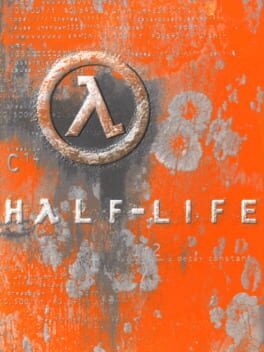
Half-Life
Боевик, приключения и удостоенная наград технология создания потрясающе реалистичного мира, в котором игрок должен думать, чтобы выживать — всё это обладатель звания «Игра года» от более чем 50 изданий, дебютная игра от Valve — Half-Life. Помимо прочего, в игре присутствует увлекательный многопользовательский режим, который позволяет играть против друзей и врагов со всего мира.
Системные требования
Минимальные
- Minimum: 500 mhz processor, 96 МБ ОЗУ, 16mb video card, Windows XP, Mouse, Keyboard, Internet Connection
- Recommended: 800 mhz processor, 128 МБ ОЗУ, 32mb+ video card, Windows XP, Mouse, Keyboard, Internet Connection
Рекомендуемые
Данные пока не загружены
Отзывы
Steam · Overwhelmingly Positive
Все отзывы в Steam159 282 положительных из 165 073 отзывов
Игрок 1736Рекомендует10 ч в игре
It's almost indescribable how important this game was for PC gaming in general. For the first time we had seamless level design where the game felt like one continuous experience. We had no cutscenes, instead the narrative unfolded directly as part of the game. You didn't need to open up a paper manual to read about the backstory for any context or premise. The gameplay loop was more in line with modern day tactical shooters, compared to the more faster paced action of games like Doom and Quake. Modding was already popular with Doom and Quake but exploded with HL. We saw the birth of games such as Counter-Strike, Day of Defeat and Team Fortress Classic which all became a commercial success and showed us that modding was going to have real benefits in the future. If shooters aren't your thing, at least try and give this one a go for the sake of appreciating the classics.
Игрок 3528Рекомендует8 ч в игре
As it happens, I’ve never actually managed to get through The Classic. Whenever the first Headcrab appeared, my PC would always crash completely, and I never got any further than that. This time, I got so far that I actually finished the game. Looks like I’d have been better off not doing that. 96/100 on MetaCritic. 83% on HLTB. «A masterpiece for the ages», «a classic», «the father of shooters» and a bunch of other catchy titles that surround Valve’s game series. Like many others, I grew up surrounded by people raving about Valve and its games, but I’ve only now had the chance to try it for myself… and ended up feeling disappointed. It’s hard to say what I was expecting. I fancied a bit of shooting after work and ended up starting Half-Life. Perhaps it wasn’t the right choice for my mood… or has the game simply not stood the test of time? ––– The game begins with a slow journey on a monorail, during which the developers clearly show what the player will encounter throughout the game: a series of short scripted scenes designed to tell the story through the environment. The game doesn’t kick off with action straight away, and this aspect would later be adopted by many other games. The transition from the calm opening to the gameplay itself is swift… at least, that was the developers’ intention. In my case, however, I encountered a bug, and the NPC simply wouldn’t open the door I needed, which meant I had to start the game all over again. A brilliant start, isn’t it? For the first half of the game, Half-Life more or less lives up to its name. For a game released almost 30 years ago, it features an impressive arsenal, a variety of locations and enemies, all with relatively decent AI for the time. But as soon as you’re halfway through the game, questions start to arise. [*]The puzzles basically just come down to pressing a button; there aren’t many physics-based challenges, and enemies are simply spammed at you. [*]The high difficulty level isn’t balanced; you can lose all your health in just a couple of hits, and the enemies turn into sponges. [*]Half of the arsenal is either awkward to use or simply rubbish. As a result, its variety adds practically nothing. [*]The sections feel drawn out, and some parts of the levels seem designed to be frustrating. [*]The platforming feels out of place in places, and when the game starts spamming flying enemies on top of that, it feels like the developer is deliberately trying to force me to use a save point or waste loads of time. Of course, it might be a bit harsh to criticise an old game, but… I play loads of old games. And this one hasn’t aged particularly well. ❗Let me make one important point: I’m not denying that Half-Life is significant for the industry, and it was indeed a well-deserved hit in its day. However, the label of «masterpiece» is far too strong: holding an important place in history and offering an enjoyable gaming experience are by no means one and the same. Before Valve’s creation, there were plenty of games that were already top-notch and did many things better: id Software shaped the FPS genre with DOOM and Wolfenstein; in the sci-fi genre, System Shock already reigned supreme, which, as an immersive sim, drew players far deeper into its world; whilst Final Fantasy VI and Ultima offered compelling storylines and freedom. Half-Life deserves to be recognised as a good game of its time, but it is certainly not the best. As far as I can tell, for many people this game was their first introduction to the world of gaming, and in that respect, yes, it’s a strong start. But if, like me, you’d already had some gaming experience before Half-Life… It doesn’t quite measure up to that, and as I don’t feel any nostalgia for it, I can’t call the game a masterpiece. An important game of its time and, for many, the first first-person shooter of their childhood, but, alas, it is now very dated and feels too drawn out in the second half. It contains a host of dull sections that can be rather irritating. Given that a remake exists, it’s only worth playing this original to experience the classic; the game hasn’t aged particularly well. It’s atmospheric and draws you into its world through the environment and scripted scenes, but it also has its flaws: the plot is as simple and secondary as it gets, and the highest difficulty setting is unbalanced. It features a large arsenal of weapons, but you’ll be lucky to use even half of them, as not all of them are comfortable to use or make much sense. It’s a shame to come away feeling a bit disappointed, but that’s just how my experience with this game turned out. A technical breakthrough for its time: [★★★★★] Immersion: [★★★★★] Action: [★★★☆☆] Enjoyment: [★★★☆☆] Story: [★★☆☆☆] «Half-Life» is: 💔 Enemies have an absurd amount of health and deal a great deal of damage on the highest difficulty setting, so I played the whole game on ‘Half Life’. 😒 The highest difficulty level is terrible; don’t play on it unless you want to end up using Save Scams. 👴 The second half of the game is hopelessly outdated and not particularly enjoyable. 🥼 A decent narrative environment, but a poor plot. 🔫 Some of the weapons feel like absolute rubbish. ⚙️ Runs smoothly on modern systems. 🥱 Excessive length. 🌀 A variety of locations. 📖 A legend of his time. 👓 ... (с) Score: [★★★★★★☆☆☆☆] «Do you know who ate all the donuts?» https://steamcommunity.com/sharedfiles/filedetails/?id=3814213964
Игрок 6585Рекомендует13 ч в игре
Данный проект от валв больше чем игра. Это не просто игра которая проходиться легко и быстро. Это целая история! Уверяю вас, каждый человек должен хоть 1 в жизни зайти в халф лайф. Пройти это сокровище из 1998 года это больше чем просто прохождение. Это эмоции которые запомнишь на всю жизнь.
Игрок 8384Рекомендует10 ч в игре
Half-Life is a classic in every sense of the word. Gordon Freeman clocks into his job at Black Mesa as a well-credentialed and respected scientist and walks out a legend in the employ of an enigmatic entity. The plot of Half-Life is actually quite horrifying as an alien species is warped into a clandestine government facility named Black Mesa during some testing that Freeman took part in, chaos immediately erupts of course. All the while one of the most compelling villains in gaming, a nameless gaunt businessman with a profound aura, looms in the background on behalf of his “employers”. Half-Life, or as I like to call it Freemans’ no good very bad day at work is an exercise in amazing level design, creative sound work, and tense live or die gunfighting. As you progress the games tremendous physics and sense of environment enhance a number of puzzles, platforming challenges, and the high-stakes combat. The game never cedes itself to simplicity and is constantly provoking the player in interesting ways. For example, in one level you must navigate a dangerous pit overrun with vicious alien tentacles and activate a test fire rocket. Doing so requires quick movement and thoughtful navigation of the rocket testing wing downward dodging the lethal tentacles, only to make your way back up to the top of the pit once you prime the rocket to fire to expunge the tentacles. This is emblematic of how progressing though levels in Half-Life is simultaneously stressful and rewarding. Gunplay is solid. Enemies are not overly spongey and similarly Freeman cannot withstand much damage. Players must be careful, take cover, pick their moments to strike, and actually think about how to progress past hazards the level places in their way. Certain enemies are equipped with grenades or weapons that have a slight seeking ability, meaning a player cannot always camp out and lure enemies into traps. The player is encouraged to consider all the tools in both Freeman’s arsenal and the environment to their advantage. Half-Life moves at a thrilling pace and never leaves Freeman’s perspective, the game is completely devoid of cutscenes. The player must rely on NPCs or environmental clues to piece together the story, and even then, there is a great deal of ambiguity as to what exactly is going on. I appreciate when games do not overburden themselves with dialogue and plot when such things are incredibly difficult to pace and design in conjunction all manner of plays styles. Half-Life has a fantastic core concept, and it executes pointedly on that premise, each level is in service of the tone it tries to invoke. The developers’ singularity of vision makes the game truly special. Black Mesa feels labyrinthian at first but ultimately compelling to master. Along his journey Freeman will crawl through vents, maneuver through processing facilities, and even fight his way across desert outskirts. Freeman is given a fun arsenal and a hazard suit that can be shielded to double his health bar at max. Starting out with only an iconic crowbar, combat is heavily disfavored and the game takes on a survival tone which is immediately engaging. But as the game progresses, so will Freemans’ arsenal, eventually including weapons like a fantastic feeling shogun and smg, a hefty revolver and rocket launcher, and of course experimental weapons found deep into Black Mesa. With this firepower, and with the players’ experience accumulating, Freeman transitions from a survivor to a force of nature. In the final levels of the game the setting becomes wildly different, tables turn, and I was awed by how out there Valve was willing to go. Half-Life is not perfect of course. I would have liked more enemy diversity, and the AI feels easy to manipulate. It is crazy how good the platforming feels, especially when the game goes all out and gives Freeman a long jump, but I would have liked more steady progressions with regard to Freeman’s navigational abilities instead of just making him incredibly speedy and nimble from the jump. Finally, Half-Life has such an interesting color palate and tone, but it also could have dipped into more varied environmental design. Half-Life stands as a pretty huge achievement. It is fun from start to finish and has such a compelling forward momentum, the player constantly feels like they are on the backfoot but also feels incredibly powerful and agile. Freeman really is a joy to inhabit, and the setting is engaging while not wasting time over explaining itself. Each level feels well realized and has meaningful challenges. Gunplay is quick and deadly, weapon choice and quick movement create exhilarating tension. It is hard to imagine a more intelligently designed shooter than Half-Life that is also surprisingly devoted to creating challenges not solved by simply pulling a trigger. Valve’s designers had a dedicated vision here and their passion created something well worth revisiting.
Игрок 7643Рекомендует38 ч в игре
Alto juegazo loco, desayuno almuerzo y ceno half life amigo. Es el mejor juego del mundo.
Игрок 7668Рекомендует1 ч в игре
This is one of those games that actually stays in your mind after you stop playing. The gameplay is fun, the atmosphere is incredibly well done, and the whole experience feels genuinely memorable. There are definitely a few things that could be improved, but they don't take away from how enjoyable the game is overall. I'm really glad I played it.
Игрок 6132Рекомендует6 ч в игре
Проходя Half-Life даже спустя столько лет, ловишь себя на мысли, что игра безупречно прошла проверку временем. Несмотря на угловатую графику и простоту механик, она всё так же легко затягивает с головой. Что поражает больше всего, так это подача истории. Даже по современным меркам здесь на редкость уникальная структура повествования. Вы постоянно находитесь в самом центре событий благодаря бесшовным локациям и полному отсутствию кат-сцен, забирающих камеру у игрока. Молчание главного героя лишь закрепляет это чувство, позволяя буквально ощутить себя в стенах Чёрной Мезы. Игра ни разу не заставляет смотреть на происходящее со стороны: всё, что случается в лаборатории, случается лично с вами. Это создаёт потрясающее погружение. И всё же реальность стоит оценивать трезво: сегодня прохождение оригинальной Half-Life - это скорее экскурс в историю геймдизайна, требующий определённой снисходительности к возрасту игры. Именно поэтому сейчас, когда есть великолепный ремейк Black Mesa, превзошедший оригинал абсолютно во всём, обычному геймеру запускать классику нет особого смысла. Но если ваша цель - чистая ностальгия или желание узнать, с чего начиналась индустрия интеллектуальных шутеров, вы отлично проведёте время. Оригинальная игра всё ещё способна увлечь и подарить массу ярких эмоций.
Игрок 6855Рекомендует8 ч в игре
"Do you think there's a cold beer for us at the end of all this?" "Don't bet on it." Aside from some issues with the geometry and movement that sometimes lead to unpredictable deaths, some obtuse puzzle solutions due to slightly dated rules, and the fact that the game never had the best combat on the market, i'm quite surprised that the whole thing still holds up so well. There's a certain timeless mastery being exercised in these excellently designed levels, which convey a strong sense of continuity through grounded environments, guiding you effortlessly, prioritizing immersion and a sense of narrative that is inseparable from the gameplay. At the same time, the game is an entirely unpredictable sequence of situations for the player to solve organically, delivered at an impeccable pace. The moment-to-moment experience is sublime, constantly surprising you and demonstrating a level of balance and polish that feels like black magic. From the exhilarating moments when the iconic sound design explodes in all its glory to the quieter moments enveloped in the Black Mesa's engrossing atmosphere, it's simply fantastic. New ideas are constantly introduced, developed, and then replaced by new ones, never allowing you to get too comfortable and ensuring that things remain consistently engaging. You never really feel the game's linearity or the limited scale of the environments you're exploring. Navigation is never exactly straightforward, it constantly spices up the journey by creating situations that force you to pay attention to where you are going and remain aware of your surroundings. Despite never getting lost, you feel a certain degree of disorientation, as if you were groping your way through unfamiliar areas and constantly wandering into places you weren't supposed to be, finding ingenious solutions to immediate problems and simply trying to survive. Ventilation ducts, industrial piping, and debris in your path become makeshift platforms, holes in walls become shortcuts, and the machinery you encounter along the way is either another headache or a key to resolving inconvenient situations. You even have a certain degree of freedom to look for optional areas, but the intended path is usually relatively easy to understand, even though nobody ever spells it out for you. They trust their own design and respect your intelligence. Ultimately, this effective level design simply embeds itself in your mind, making you remember every corner and nuance of the environment—something only the best manage to achieve. Somehow, they perfected resource distribution formula back in 1998. Everything you find feels useful. You never feel cornered with no chance of recovery, nor so over-supplied to the point of undermining the dynamic between you and the enemies. The levels offer just enough meaningful detours to reward your attention and curiosity, allowing you to squeeze out a small advantage without ever losing sight of the main path. It seems you always have enough ammo and a reasonable margin for error that accommodates the player going off to explore in search of extra supplies; yet, the distribution is finely tuned enough to provide the satisfaction of making decisions about rationing ammo for your most powerful weapons and feeling the consequences of wasting it unnecessarily. Simply perfect. That unpredictability I mentioned? It even extends to the secrets you find. You never know what's going to happen, and sometimes you stumble upon things by accident and still feel like it was a deliberate decision on your part, given the degree of precision with which everything seems to have been executed. The combat, while not among the best or most challenging, features a myriad of iconic and distinct weapons, as well as several enemies that more than fulfill their role in posing a threat. You get the feeling that killing things isn't exactly the experience's main draw, but they handled it creatively enough to at least generate a wide variety of exciting situations that blend combat with all the other elements you encounter throughout the game. They're also not afraid to throw in bombastic set pieces that serve both as spectacles and as opportunities to create interesting problems to solve. But on a more negative note, the game's movement feels a bit odd. You’re constantly getting snagged on parts of the environment forcing you to stop and figure out what’s blocking your path. You are highly mobile—reminiscent of Quake—but the movement lacks any sense of precision, which clashes directly with the constant demands that you navigate narrow platforms and tight geometry. It never feels comfortable or gives you a real sense of control. And while this might contribute to a certain sense of unease, once you get used to it, it simply becomes an annoyance. Some sequences amplify the game's issues and are mildly infuriating due to their trial-and-error nature, which are only mitigated by the constant checkpoints the game creates. "On A Rail" (Chapter 8) is the first point where things threaten to go off the rails (No pun intended)—making me regret dusting this thing off instead of just playing the remake—but fortunately, it doesn't last too long. There's not much to say about the visuals. Nowadays, the game has acquired a minimalist, elegant veneer that doesn't hurt your eyes or clutter the screen with visual noise, which perhaps makes navigating its environments considerably smoother. There's a certain emphasis on old games that emerges from the simplicity of their visuals when contrasted with the sensory overload of modern graphics. It's as if the important things stood out more clearly, while the subtler details spoke louder. Little things in the sound, small effects that create highly memorable scenes, still stand out in impressive ways. But I wouldn't bet on these graphics appealing to anyone. Then again, the indie scene's annoying obsession with nostalgia has probably raised younger audiences' tolerance for graphics that look like they're from the Paleolithic era—or worse—so at least it might not seem out of place... Anyway, Half-Life's blend of hard sci-fi, survival horror, and old-school action remains one of the most unique and best-executed combinations in the medium. It's a well-ordered symphony in which every part fulfills its function with considerable competence. It's one of the industry's most influential cultural pillars, a groundbreaking experience that still reverberates today, despite its voice unfortunately having grown weaker over the years. It's still an absurdly memorable and creative game that has aged surprisingly well and carries with it, without a shadow of a doubt, essential lessons worth remembering. It is by no means an exaggeration to say that, for such an old game with such simple mechanics, it demonstrates a level of competence that would put much of modern gaming to shame. The innovation the game brought to the table back in its day may no longer mean much, but the design principles behind it seem fresher than ever. Simply, a great game. (But I'm never going to touch this again.)